
This list is for facility managers and property owners across the North East who want to cut boiler fuel use and catch faults before they become breakdowns. The market mixes building controls, energy analytics and monitoring platforms that do very different jobs, so the tools below were chosen on boiler-relevant capability (metering, plant monitoring, control and alerting), suitability for UK commercial sites, reporting for compliance, and how much hardware or specialist support each one needs. Software only informs decisions about plant. Any work on gas appliances must still be done by a Gas Safe registered engineer, as part of commercial boiler maintenance that software cannot replace.
Siemens Desigo CC is a supervisory platform for a building management system (BMS), the control layer that schedules, monitors and alarms heating plant and other services. It is designed for owners of large, complex estates who want one screen and one alarm list rather than a separate system per trade.
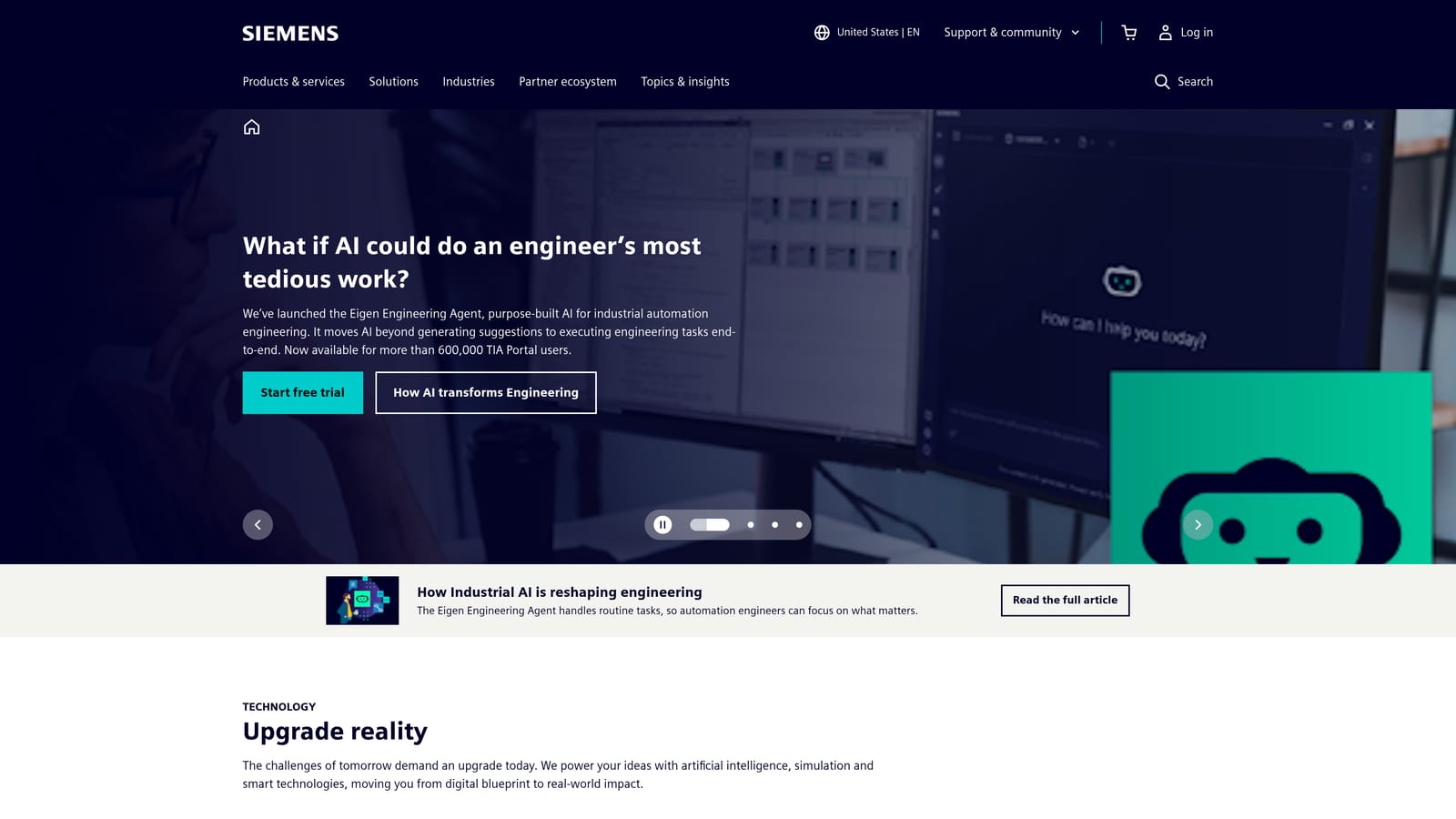
Its distinctive strength on this list is breadth. Heating, HVAC, fire and security can sit under one supervisory layer, so a boiler lockout can be viewed alongside the ventilation and fire status of the same building. No other option here positions itself that way.
Setup is integrator-led. Expect surveys, engineering of the points list, commissioning and ongoing support from a specialist, and usually a dedicated controls or estates team to run it day to day. That is why it is too heavy for a single small boiler house, and why it rarely suits an owner with one or two plant rooms.
Remember that supervision is not servicing. An alarm tells you a boiler needs attention; combustion testing, repairs and flue checks remain work for a Gas Safe registered engineer. Pricing is quote-based as of October 2026 and depends on the number of points, modules, sites and the integrator's engineering time.
Best for: Large multi-system estates such as hospitals and campuses.
Schneider Electric EcoStruxure Building combines building operation dashboards with energy analytics, and can monitor boiler plant and report consumption. It is aimed at organisations that want energy oversight first and detailed plant control second.

What sets it apart here is scalability. You can begin with one site's dashboards and extend to portfolio-wide benchmarking, comparing similar buildings to find the ones burning more gas than they should. That progression suits a business adding units or buildings in Newcastle, Teesside or beyond.
Design and commissioning need an accredited Schneider partner, so your first cost and your first contact is a partner rather than the manufacturer. Support quality will therefore reflect the partner you choose, and it is worth asking for references from sites with similar plant. Day-to-day running usually falls to a facilities or energy manager who can interpret the dashboards, with the partner handling configuration changes.
It is less suitable for a single-boiler site that only needs a timer and thermostat, where the engineering effort outweighs the benefit. Software of this kind does not save fuel on its own: savings come from acting on what it shows. Any resulting change to gas appliance settings must be made by a Gas Safe registered engineer. Pricing is quote-based as of October 2026 and varies with sites, points and analytics scope.
Best for: Organisations growing from single-site to multi-site energy oversight.
Honeywell Forge is a cloud-based enterprise platform for building performance and energy analytics. It is built for owners and operators who manage many buildings and want one analytical view of them, not a tool for running a single plant room.

Its distinctive angle is analytics-led optimisation across large portfolios. Rather than concentrating on local control, it looks for patterns across buildings, such as sites whose heating runs outside expected profiles, and prioritises where to act.
Integration is strongest with Honeywell's own building controls. Connection to third-party BMS equipment is possible in some cases, but verify what your existing controllers support before assuming it. Setup involves data connections from each building into the cloud platform, plus onboarding by Honeywell or a partner, and an analyst or energy manager to work through the findings.
It is enterprise-focused and not suited to independent single-site owners, who would pay for portfolio capability they cannot use. Even good diagnostics only point to a problem. A flagged efficiency fault on a boiler still needs a Gas Safe registered engineer to inspect and repair it, in line with the Gas Safe (Installation and Use) duties on landlords and employers. Pricing is quote-based as of October 2026 and typically depends on the number of buildings, assets connected and modules chosen.
Best for: National portfolios wanting centralised analytics.
Trend Control Systems IQ is a UK-developed building management and controls platform that has been widely used in British commercial buildings. It is the most boiler-control-focused option on this list, and several of its functions are exactly what ageing plant rooms lack.

Two terms are worth defining. Weather compensation adjusts boiler flow temperature to outside conditions, so the system does not run hotter than a mild North East day requires. Optimum start learns how long a building takes to warm up and starts the heating as late as possible to hit the occupancy time.
Its standout is UK heritage and an ability to retrofit legacy plant, which matters for older buildings across Tyneside and Wearside with ageing controls. Protocol support includes BACnet and Modbus, though you should verify the specifics for your boilers.
The limitation is its route to market. It is sold through partners, so support quality varies by installer, and your experience depends heavily on who you appoint. Choose an installer with local references and clear after-sales terms. Controls changes alter how boilers are called to run, but adjusting burner or gas settings is separate work reserved for Gas Safe registered engineers. Pricing is quote-based via partners as of October 2026, shaped by the number of controllers, points and the scope of the retrofit.
Best for: UK sites upgrading ageing boiler controls.
Switch2 Energy is a UK provider of smart metering, heat metering and energy data services. It does not control boilers. It measures what they deliver and who uses it, which makes it a different category from the building controls platforms above.
The distinctive strength is heat metering and tenant billing for multi-occupancy buildings. Where one central boiler plant serves several tenants, sub-metering (metering individual tenants or zones downstream of the main supply) lets heat costs be recharged on actual use rather than guesswork.
Features that matter to a landlord or managing agent:
Integration is with meter and billing systems. Check compatibility with your accounting or property management software before committing. Meter installation involves on-site work, and any meter fitted to gas pipework or heat circuits must be installed by suitably qualified, Gas Safe registered engineers where gas is involved. Day-to-day, the platform is usually run by a property manager or finance team rather than a controls engineer.
Be clear about the limits. It offers metering and reporting only, with no direct boiler control and no plant fault diagnostics, so it will not tell you why a boiler is inefficient. It is a poor fit for an owner-occupier with a single small boiler and no tenants. Pricing is quote-based as of October 2026 and generally depends on the number of meters, the type of metering and the level of billing service.
Best for: Landlords and managing agents recharging heat costs.
Stark is a UK energy monitoring platform that turns smart meter data into dashboards. It is designed for businesses that want to see what their buildings use without commissioning a controls project.
The standout is speed to visibility for sites that have no BMS. If your boiler house has no supervisory system, a data-led view of gas consumption can reveal out-of-hours burn and seasonal drift quickly, with no plant room wiring.
Setup is light because it relies on meter data rather than plant connections, though your meter must support the data feed. It is typically managed by an energy or facilities manager, with no integrator required.
The trade-off is plain: it is not a controller, and savings depend on acting on the data. A dashboard that shows gas running at 3am only helps if someone changes the schedule or has the boiler checked. It also cannot tell you whether a boiler is operating faultily, only that consumption looks unusual. A Gas Safe registered engineer is needed to investigate any suspected appliance problem. Pricing is listed as see website as of October 2026; check with Stark how it varies by number of meters or sites.
Best for: Sites wanting visibility without a controls project.
For smaller premises, Centrica Business Solutions offers a route based on wireless thermostats and zoning controls. The current commercial range changes, so confirm product names and capabilities with Centrica before buying.
Its distinctive value is low-cost, simple scheduling for small units without a BMS. If a shop or small office has one boiler and a heating timer that nobody has reviewed in years, a wireless scheduling system can stop heating running when the premises are empty.
Setup is far lighter than any BMS: typically a supplier-led installation and a site owner or office manager running schedules afterwards. Integrations with other systems are limited, and you should check this before purchase rather than assume compatibility.
The limitations matter. There are no plant-level diagnostics, so it will not tell you a burner is failing or a pump is struggling, and it is unsuited to multi-boiler plant rooms where sequencing is needed. Remote scheduling changes when heat is requested, not how the appliance burns gas. Settings on the boiler itself, and any fault, must be left to a Gas Safe registered engineer. Pricing is listed as see website as of October 2026; ask what varies with the number of zones, devices and any subscription.
Best for: Small shops and offices with a single boiler.
Commercial Boiler Solutions is not software. It is a Gas Safe registered commercial boiler maintenance, inspection and repair service for the North East and Northumberland, and it appears here because monitoring platforms generate alerts that someone competent has to act on.
Its distinctive strength on this list is that its engineers can respond to a software alert with on-site testing and repair. A dashboard may show a rise in gas use or a repeated lockout, but only an engineer can test combustion, inspect the flue, replace a failed component and make the appliance safe. Gas work is governed by the Gas Safe (Installation and Use) Regulations 1998, and employers have wider duties under the Health and Safety at Work Act 1974.
It works alongside your existing BMS or monitoring, so there is no integration project; confirm with the team how alerts reach them in your set-up. The service covers commercial properties across Newcastle, Sunderland, Middlesbrough, Tyneside, Wearside, Teesside and North Yorkshire, and suits sites that have the monitoring but lack hands-on engineering behind it.
The limitation is obvious: it provides no software licence, no dashboards and no analytics, so it will not replace any of the platforms above. Pricing is quote-based as of October 2026, depending on the number and type of boilers, the visit frequency and the site's location.
Best for: North East sites needing hands-on servicing behind their monitoring.
For large estates with several building systems, Siemens Desigo CC is the most complete supervisory option, provided you have an integrator and a team to run it. Where heat is shared between tenants, Switch2 Energy solves the recharging problem that controls platforms do not. For a small site with a single boiler and no BMS, Centrica's wireless controls are the simplest route to sensible schedules. If you only want data before deciding on a controls project, Stark gives visibility quickly. Trend suits ageing plant, while Schneider and Honeywell fit growing and national portfolios respectively.
Whichever you choose, software cannot replace Gas Safe registered servicing. It can highlight a problem, but it cannot test combustion, inspect a flue or repair an appliance, and remote changes to gas appliance settings are not something non-engineers should attempt. Always check an engineer's registration on the Gas Safe Register.
If you suspect a gas leak, leave the area immediately and call the National Gas Emergency Service on 0800 111 999.
If your monitoring is telling you something is wrong, or you want reliable engineers behind it, Learn more about our services.