
If you manage a commercial property in the North East or Northumberland, keeping your boiler in reliable working order is not optional. It is a legal and safety obligation. Under the Gas Safety (Installation and Use) Regulations 1998 and the Health and Safety at Work Act 1974, employers and landlords have a clear duty to ensure gas appliances and heating systems are properly maintained by competent, Gas Safe registered engineers.
But knowing what a thorough commercial boiler service should actually include is not always straightforward. Providers vary considerably in how comprehensive their inspections are, and without knowing what to expect, it is difficult to hold anyone to account. This guide breaks down the essential checks that any reputable commercial boiler service should cover, so you can ask the right questions before booking and verify that the work has been done properly afterwards.
Whether you are preparing for winter demand across Tyneside, scheduling an annual inspection in Northumberland, or responding to an unexpected fault in Teesside, understanding what good service looks like protects your property, your people, and your compliance record.
Best for: Meeting the legal minimum requirement for any commercial gas boiler work in the UK.
Gas Safe Register is the official UK body for gas registration, and only engineers listed on it may legally carry out gas work on commercial boilers. This is not a quality benchmark to aspire to — it is the legal baseline, and work carried out by an unregistered person is a criminal offence.
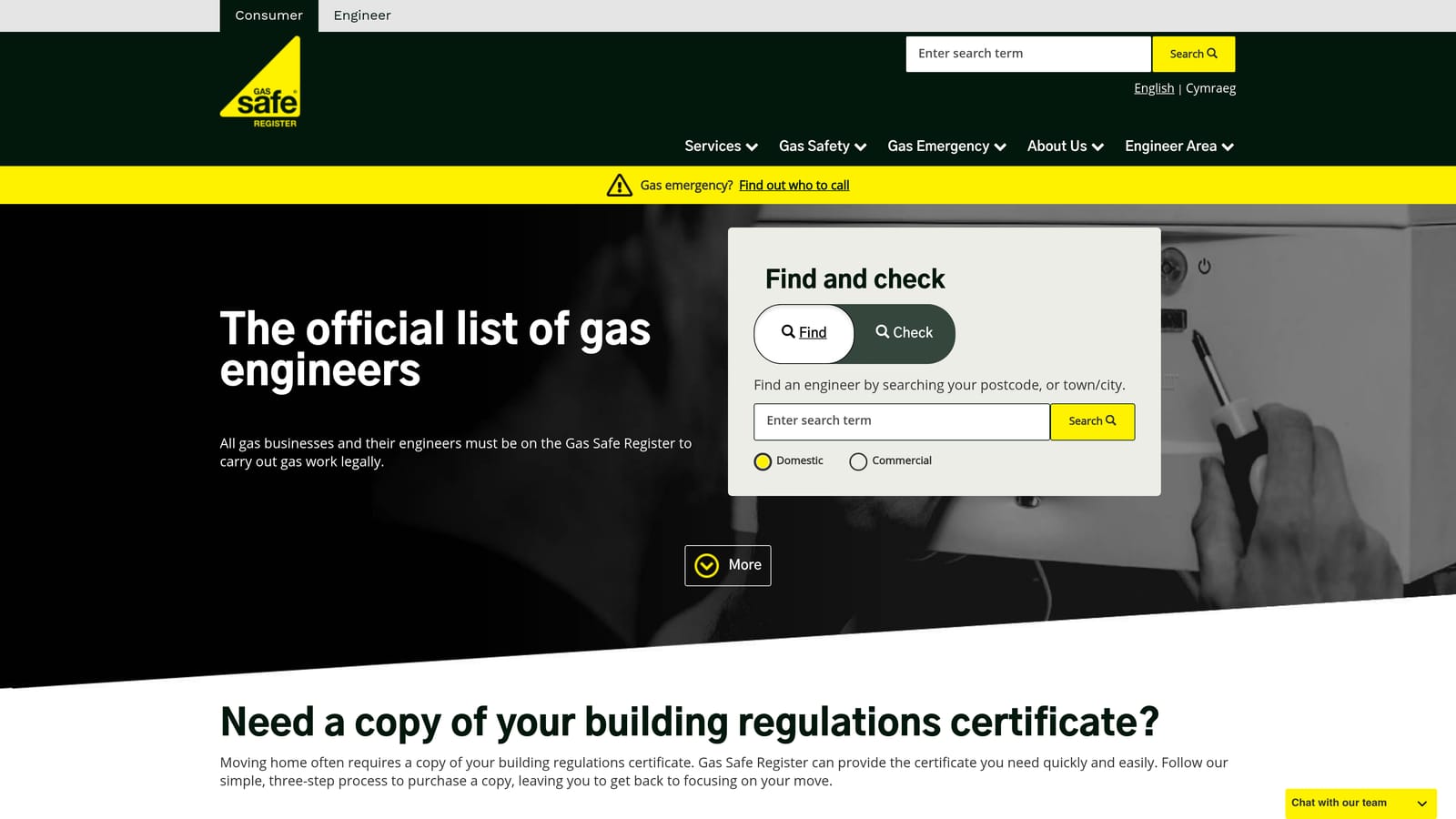
Before any engineer touches your boiler plant, you have the right — and the responsibility — to verify their Gas Safe registration. This can be done quickly and publicly at gassaferegister.co.uk, where you can search by registration number or name. Do not simply take a contractor's word for it.
Commercial Boiler Solutions is Gas Safe registered and carries out commercial boiler servicing across the North East and Northumberland, including Newcastle, Sunderland, Middlesbrough, and the surrounding areas. Every job is carried out by a registered engineer, and registration details are available on request before any work begins.
Legal Requirement: Mandated under the Gas Safety (Installation and Use) Regulations 1998 for all commercial gas appliance work.
Public Verification: Any engineer's registration can be checked instantly at gassaferegister.co.uk — no need to take it on trust.
Full Scope Coverage: Gas Safe registration covers all gas appliances, pipework, and flues within commercial premises.
Criminal Liability: Commissioning or carrying out gas work without registration is a criminal offence under UK law.
Insurance Implications: Many commercial insurance policies require that gas work is carried out by a registered engineer — non-compliance can invalidate your cover.
Every commercial property owner and facility manager in the UK, without exception. There is no scenario in which using an unregistered engineer is acceptable or legal. This applies equally to a small office in Gateshead and a large industrial facility in Northumberland.
Gas Safe registration is not a chargeable add-on. It is a prerequisite for any legitimate commercial boiler service. If a provider cannot supply their registration number before work begins, do not proceed.
Best for: Confirming safe, efficient combustion and identifying carbon monoxide risks that visual checks alone cannot detect.
A combustion analysis test measures the composition of gases leaving your boiler's flue, confirming whether the burner is operating safely and within manufacturer tolerances. This is one of the most important checks in any commercial boiler service, and one that is sometimes omitted by less thorough providers.
Carbon monoxide is colourless and odourless. It cannot be detected by sight or smell, which is why combustion analysis is essential rather than optional. A boiler can appear to be functioning normally while producing dangerous levels of CO due to incomplete combustion or flue gas spillage.
Flue integrity is equally important. A cracked or poorly drawing flue can allow combustion gases to re-enter occupied areas of the building. In a busy commercial premises, this represents a serious risk to occupants.
Carbon Monoxide Detection: Identifies incomplete combustion that produces CO, which is undetectable without specialist equipment.
Flue Integrity Check: Confirms the flue is drawing correctly and that gases are being safely expelled from the building.
Burner Performance: Verifies the burner is operating within the parameters specified by the manufacturer.
Efficiency Indicator: Poor combustion analysis results often indicate that the boiler is consuming more fuel than necessary, increasing running costs.
All commercial boiler plant, but particularly important for larger installations, older boilers, and any premises where occupants spend extended periods, such as care homes, schools, and offices across Tyneside and Wearside.
Combustion analysis should be included as standard in any comprehensive commercial boiler service. If a provider does not mention it, ask specifically whether it is part of their service scope.
Best for: Detecting physical deterioration that directly affects both boiler safety and operating efficiency.
The heat exchanger and burner are the core working components of your commercial boiler. Physical inspection of both — including a strip-down where necessary — is essential for identifying problems before they develop into failures or safety hazards.
Cracks in the heat exchanger are a serious concern. They can allow combustion gases, including carbon monoxide, to pass into the heating circuit or the surrounding plant room. This type of defect is not always visible without a thorough inspection, and it will not be identified by combustion analysis alone.
Burner fouling is a more common finding, particularly in older commercial plant. Contaminated or worn burner components reduce combustion efficiency, increase fuel consumption, and can cause nuisance lockouts that disrupt heating across the building.
Crack Detection: Identifies heat exchanger cracks that can allow combustion gases to contaminate the heating circuit.
Corrosion Assessment: Checks for corrosion or fouling that weakens the heat exchanger over time.
Burner Condition: Examines burner components for wear, contamination, and deterioration.
Documented Findings: All inspection findings should be recorded in the service report, providing a baseline for future assessments.
Particularly important for older commercial boiler installations common in North East commercial properties, including converted industrial buildings and older office stock across Teesside and Northumberland.
Included in a full strip-down service. Replacement of damaged or worn components is charged additionally, and any reputable provider will present findings and costs before proceeding with remedial work.
Best for: Verifying that the boiler's last line of defence against dangerous operation is actually working.
Commercial boilers are equipped with multiple safety devices designed to shut the system down if operating conditions become unsafe. Functional testing of these devices is not optional — it is a critical part of any responsible annual service.
Safety controls that have never been tested may appear functional but fail to operate when actually needed. Overheat thermostats, pressure relief valves, and automatic gas shut-off systems can all develop faults over time, particularly in plant that runs continuously through the North East's long heating season.
If your boiler repeatedly drops pressure between services, our step-by-step guide on commercial boiler keeps losing pressure explains how to diagnose the cause safely before calling an engineer.
Pressure relief valves require particular attention. A valve that fails to lift at the correct pressure, or that discharges into an unsafe location, represents a significant hazard. Equally, a valve that has been manually overridden or tampered with must be identified and rectified immediately.
Overheat Protection: Tests the overheat thermostat and confirms the boiler shuts down correctly before reaching dangerous temperatures.
Pressure Relief Valve: Verifies the valve operates at the correct pressure and that discharge pipework is correctly routed.
Gas Valve and Interlock: Checks automatic gas shut-off systems and safety interlocks function as designed.
Documented Results: Test results must be recorded in the service documentation to demonstrate compliance.
All commercial boiler installations, with particular importance for high-output plant in larger commercial premises such as industrial units, care facilities, and multi-occupancy buildings across Newcastle and Sunderland.
Functional safety testing should be included within a thorough annual service. Replacement of any failed safety components will be charged additionally, and this work should never be deferred given the risk implications.
Best for: Protecting the heat exchanger and wider heating system from corrosion, scale, and premature failure.
Poor system water quality is one of the most common and preventable causes of commercial boiler failure. Testing the water within the heating circuit for pH balance, inhibitor concentration, and signs of corrosion should be a routine part of every annual service.
Magnetite, commonly known as black sludge, accumulates in heating systems where inhibitor levels have been allowed to deplete. It circulates through the system, causing abrasive damage to pumps, valves, and the heat exchanger itself. In older commercial properties with ageing pipework, this is a particularly common finding.
Limescale is a related concern, especially in areas where water hardness is higher. Scale build-up on heat exchanger surfaces acts as an insulator, reducing heat transfer efficiency and forcing the boiler to work harder to meet demand.
pH Testing: Confirms system water is within the correct pH range to prevent corrosion of internal components.
Inhibitor Concentration: Checks that inhibitor levels are adequate, with dosing recommended where levels have dropped.
Magnetite Detection: Identifies black sludge contamination that causes abrasive damage throughout the system.
Scale Assessment: Flags limescale build-up that reduces efficiency and can lead to heat exchanger damage.
Particularly relevant for older commercial properties across the North East with ageing pipework, and for any system that has not had a water quality check within the past twelve months.
Water testing should be included within the service. Power flushing or chemical treatment, where required, will be quoted separately following the assessment.
Best for: Ensuring the heating system operates as intended, avoiding energy waste and comfort complaints across the building.
A boiler that is mechanically sound but poorly controlled will still cause problems. Checking and calibrating the full controls package, from programmers and thermostats to zone valves and building management system interfaces, is an important part of a complete commercial service.
Thermostats that read inaccurately cause the boiler to fire more frequently than necessary, or to fail to reach the required temperature, leading to either energy waste or comfort complaints from building occupants. In a multi-zone commercial building, a single miscalibrated thermostat can affect an entire floor or wing.
Time clocks and programmers that have drifted from the correct schedule are a common source of unnecessary fuel consumption, particularly over the autumn and winter months when North East commercial properties are running heating for extended periods each day.
Thermostat Accuracy: Checks thermostat readings against calibrated reference equipment and adjusts where necessary.
Programmer Verification: Confirms time clocks and programmers are set correctly and operating to schedule.
Zone Valve Operation: Tests zone valves for correct operation and sequencing across the building.
Multi-Zone Suitability: Particularly valuable for offices, care homes, and schools with complex zoning requirements.
Multi-zone commercial buildings including offices, care homes, schools, and hospitality premises across the North East where heating demand varies significantly between areas and times of day.
Controls calibration should be included within a comprehensive service. Replacement of faulty controls or programmers will be quoted on inspection.
Best for: Confirming that the gas supply to the boiler plant is sound, correctly labelled, and free from leaks or damage.
The gas supply pipework serving your commercial boiler is as important as the boiler itself. Inspection and tightness testing of accessible pipework, isolation valves, and flexible connections is required under the Gas Safety (Installation and Use) Regulations 1998 and should be part of every responsible commercial service.
Gas pipework in commercial premises is subject to mechanical stress, vibration, and corrosion over time. Flexible connections in particular can deteriorate without obvious external signs, and isolation valves that have not been operated regularly may seize or fail to provide a reliable shut-off when needed.
Correct labelling of isolation valves is a safety requirement that is often overlooked. In an emergency, plant room personnel need to be able to isolate the gas supply quickly and confidently. Unlabelled or incorrectly labelled valves create unnecessary risk.
Gas Tightness Test: Pressure testing of accessible pipework and connections to confirm there are no leaks present.
Isolation Valve Check: Confirms all isolation valves operate correctly and are clearly and accurately labelled.
Visual Inspection: Checks for corrosion, mechanical damage, or unsupported pipework runs that could develop into problems.
Emergency Guidance: If a gas leak is suspected at any point during or outside of a service visit, leave the area immediately and call the National Gas Emergency Service on 0800 111 999.
All commercial premises, with particular importance for older properties where pipework may not have been inspected recently, and for plant rooms that have undergone modifications or partial refurbishment.
Gas tightness testing and valve inspection should be included within a full commercial boiler service. Any remedial pipework identified will be quoted separately before work proceeds.
Best for: Demonstrating compliance, supporting insurance requirements, and building a reliable maintenance history for your boiler plant.
A written service report documenting all checks carried out, findings, actions taken, and recommendations is not a bureaucratic formality. It is your evidence of compliance under the Health and Safety at Work Act 1974 and a practical tool for planning and budgeting future maintenance.
Without a written record, you have no way to demonstrate that your boiler has been properly serviced. In the event of an incident, the Health and Safety Executive may ask to see maintenance records. Many commercial insurers require documented evidence of annual servicing as a condition of cover. A missing or inadequate service record can leave you exposed on both fronts.
Beyond compliance, a well-maintained service record allows you to track the condition of your boiler plant year on year. Trends such as recurring faults, declining combustion efficiency, or deteriorating water quality become visible over time, enabling informed decisions about repair versus replacement before a crisis forces the issue.
Comprehensive Documentation: Records all checks performed, results obtained, and any remedial actions taken during the service visit.
Compliance Evidence: Provides the written record required to demonstrate compliance with health and safety legislation.
Insurance Support: Satisfies the documentation requirements of many commercial property insurance policies.
Year-on-Year Baseline: Enables tracking of boiler condition over time, supporting planned maintenance decisions.
HSE Ready: Should be retained and available for inspection by the HSE or insurers at any time.
Every commercial property owner and facility manager, without exception. If a provider does not offer a written service report as standard, treat that as a significant red flag and seek an alternative.
A written service report should be provided as standard with every commercial boiler service at no additional charge. It is a basic expectation, not an optional extra.
Taken together, these eight checks form the backbone of a thorough, compliant commercial boiler service. The Gas Safe registered engineer inspection establishes the legal foundation. Combustion analysis and heat exchanger inspection address the most serious safety risks. Safety controls testing, water quality checks, and controls calibration protect efficiency and reliability. Gas pipework integrity confirms the supply is sound. And the service report ties everything together as your evidence of compliance and your planning tool for the year ahead.
For commercial properties across the North East, the period between late August and October is the ideal window for annual servicing. Addressing any issues before the heating season begins means your system is ready to perform reliably when temperatures drop across Tyneside, Wearside, and Northumberland, rather than discovering a problem on the coldest morning of the year.
Commercial Boiler Solutions is Gas Safe registered and provides comprehensive commercial boiler servicing across Newcastle, Sunderland, Middlesbrough, Tyneside, Wearside, Teesside, and Northumberland. With a 5-star rating and same-day emergency callout available, the team brings the full range of checks described in this guide to every service visit, backed by a detailed written report on completion.
If your annual service is due, or if you want to confirm that your current provider is covering all the bases, learn more about our services and get in touch to arrange a visit from a Gas Safe registered engineer.