
This list is for facility managers and property owners across the North East who want a heating maintenance routine that is followed and can be evidenced. The tools were chosen for how well they support planned maintenance, compliance records and competent handling of gas work. Software schedules and records, instruments measure, and Gas Safe registered engineers carry out anything involving gas. The list mixes all three because a checklist needs each of them.
Commercial Boiler Solutions is our own service, so weigh this entry with that in mind. It is a Gas Safe registered commercial boiler maintenance, inspection and repair business serving Newcastle, Sunderland, Middlesbrough, Tyneside, Wearside, Teesside, North Yorkshire and the wider North East and Northumberland. It suits property owners and facility managers who want the gas-side items on their checklist done by a competent person and documented.
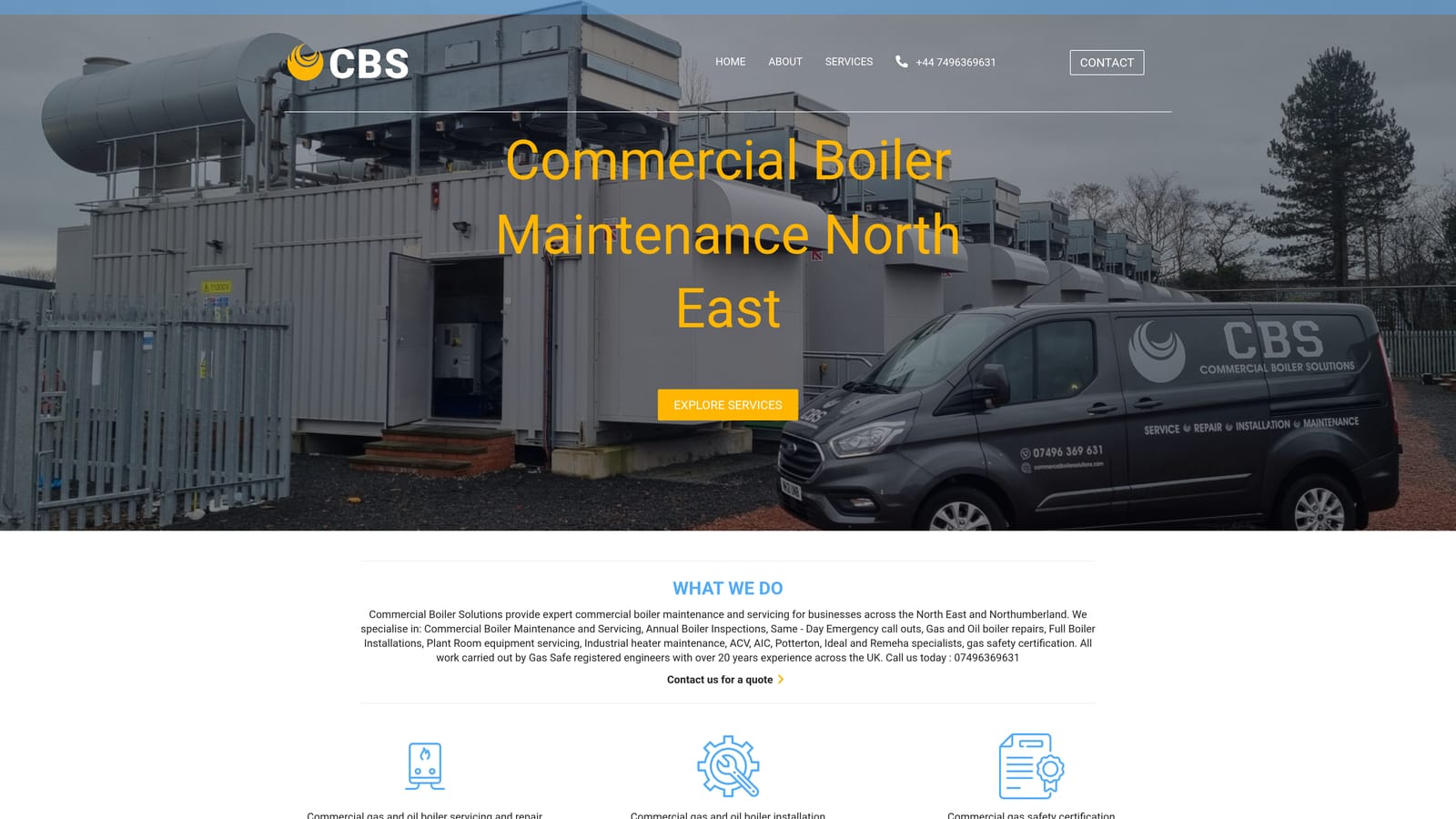
What sets it apart on this list is who does the work. Every other entry either schedules tasks or measures something. Under the Gas Safety (Installation and Use) Regulations 1998 and the Health and Safety at Work Act 1974, gas appliances and flues must be safe and maintained, and that work can only be done by a Gas Safe registered engineer. You can verify any engineer on the Gas Safe Register. Our engineers carry out the work and provide the written service record that your software or filing system then stores.
There is no software to log into and no integrations to configure, so setup is a conversation about your plant, access and service frequency. Day to day, your own team simply receives the records and files them, or uploads them to whichever system you use.
The limitations are plain. Coverage is regional, so sites outside the North East and Northumberland are better served locally. It is also not a self-service tool: it will not give you a dashboard of non-gas assets, reminders for fire alarm tests or a mobile checklist for your caretaker. Many clients pair it with one of the software options below.
Pricing is quote-based and depends on the number and type of boilers, site access, service frequency and the scope of any maintenance contract.
Best for: Commercial sites in the North East needing competent gas work and compliance records.
Planon is an integrated workplace management system built for large estates, with planned preventive maintenance as one of its modules. It is aimed at organisations such as universities, hospitals or large corporate portfolios, where a central facilities team manages many buildings and contractors.

Its distinctive strength is the asset hierarchy. Boilers, pumps, valves and controls can sit in a structured register tied to buildings and floors, with recurring task templates attached at each level. A change to a template can then flow across a whole estate rather than being edited site by site.
Integrations vary, and you should check the current list with the vendor. Implementation is a project rather than a sign-up: expect data migration, configuration and training, and a dedicated system administrator or facilities systems team to run it.
It is too heavy for a single-site owner or a small team, and the effort of building the asset hierarchy will not pay back on a handful of boilers. Like any software, it records gas work but cannot perform it; a Gas Safe registered engineer must still service the appliances. Pricing is quote-based and typically reflects scope, modules and the size of the estate.
Best for: Large multi-building estates.
Limitations first: Maintenance Care needs a proper upfront data-entry effort. Before it is useful, someone must load your sites, assets and existing certificates, and a half-populated register gives false comfort. For organisations willing to do that, it is a UK-focused CAFM (computer-aided facilities management) and maintenance management system covering planned maintenance and compliance.
Its edge over the generic tools here is statutory compliance scheduling designed around UK requirements, with certificates attached directly to the asset they relate to. When an auditor or insurer asks for the last boiler service record, you open the asset rather than search a shared drive.
Check the current integrations with the vendor. It is typically run by a facilities or compliance manager, with contractors supplying documents. It suits multi-site operators better than someone with one building, where the setup effort may outweigh the benefit. As with every software product here, it tracks that gas work is due and done but does not replace the Gas Safe registered engineer. Pricing is quote-based.
Best for: Multi-site UK operators tracking statutory inspections.
Fiix is a cloud-based CMMS (computerised maintenance management system) from Rockwell Automation, built around preventive maintenance and mobile work orders. It comes from an industrial maintenance background, which shows in how it treats plant as equipment to be monitored rather than simply as certificates to be filed.
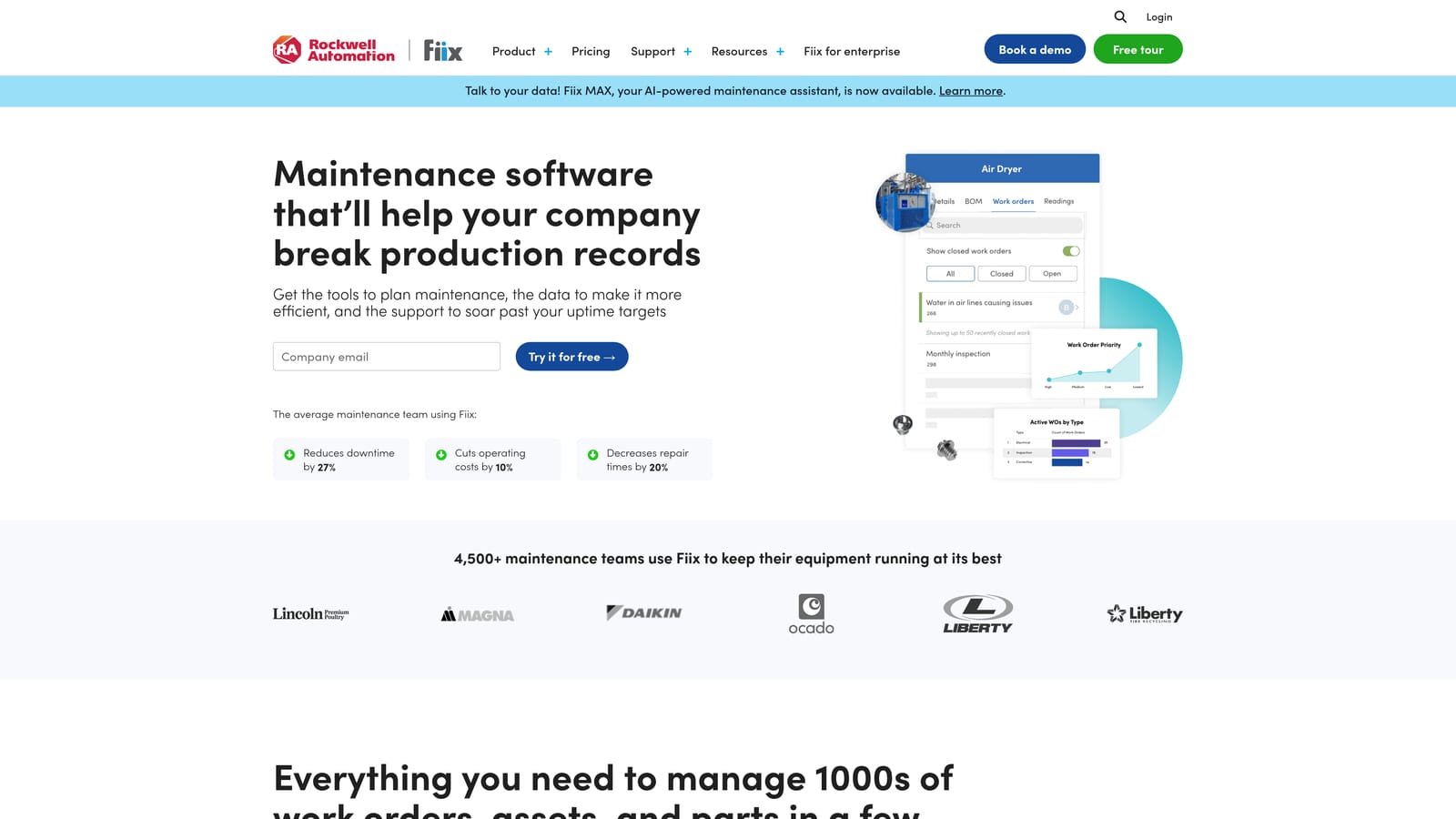
Its standout feature is meter-based triggering. Instead of only scheduling a task every three months, you can trigger it by usage, such as runtime hours on a circulation pump or fan. That suits plant whose wear depends on how hard it works rather than on the calendar.
Check the current integrations with the vendor. Setup is lighter than with an enterprise system, though you still need to build your asset list and templates, and someone in the maintenance team has to own it.
The main limitation is that it is not tailored to UK gas compliance. It will not know what the Gas Safety (Installation and Use) Regulations 1998 expect, so use it for non-gas plant checks such as pumps, pressurisation units, controls and general inspections, and leave gas work to a Gas Safe registered engineer. Pricing is by tiered plans, which have changed over time; see the vendor's website for current terms as of October 2026.
Best for: In-house teams managing non-gas plant checks.
UpKeep is a mobile-first CMMS aimed at small and mid-sized maintenance teams. It is the easiest route on this list from a paper or spreadsheet checklist to a digital one, and it can be running quickly with little training.
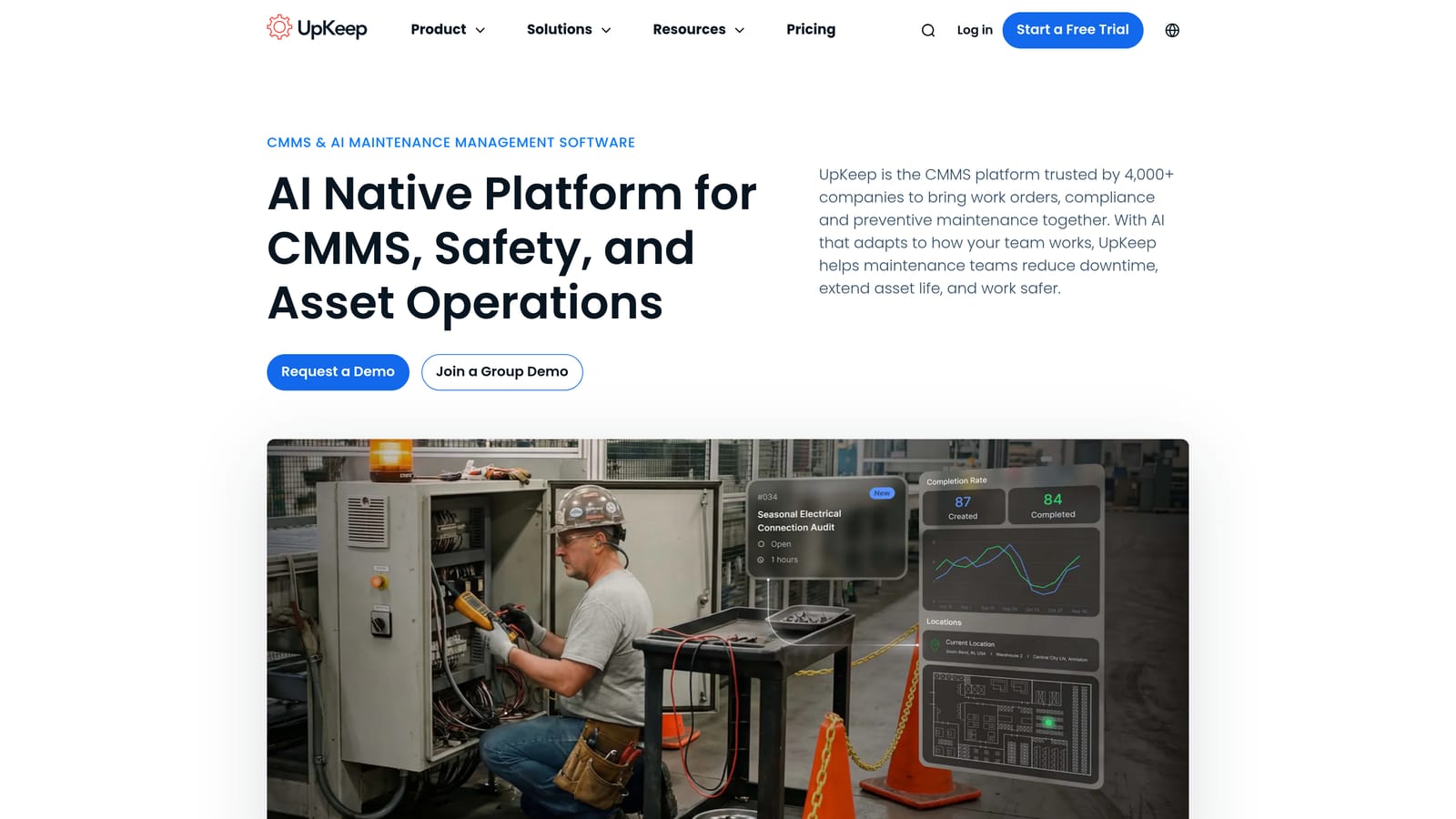
The checklist builder is the reason to consider it. You can turn your existing boiler-room walk-round into a digital form, require photographs, and have the completed record time-stamped and stored. For a caretaker or site manager doing weekly visual checks, that is more reliable than a clipboard.
Check the current integrations with the vendor. One person can set it up, and day-to-day use sits with the site manager and any technicians they assign.
Its statutory compliance depth is limited, so it will not manage a complex certificate regime across many sites the way a CAFM system can. Visual checks logged in an app are not a substitute for a service: staff must not open boilers, adjust gas settings or work on flues, and anything beyond a visual look belongs to a Gas Safe registered engineer. Pricing is by tiered plan, so see the website for current figures as of October 2026; cost usually moves with the number of users and the features.
Best for: Single-site managers wanting a lightweight digital checklist.
This entry differs from the rest because you do not operate it. The Testo 300 is a professional combustion analyser used by Gas Safe registered engineers to measure what is actually coming out of a flue. Combustion analysis means sampling the flue gases to check things like carbon monoxide (CO), carbon dioxide (CO2) and efficiency against expected values.

Its value to a facility manager is evidence. Measured readings, rather than a statement that the boiler "looked fine", can be recorded and attached to the service report. They show how the appliance was burning on the day, and comparison between visits can reveal drift before a fault develops.
Software and app options exist for transferring readings; check current compatibility with the vendor. The engineer carries the instrument, keeps it calibrated and interprets the results.
It is not for property owners to buy and use. It needs calibration and the competence to interpret readings and act on them, and gas work must be done by a Gas Safe registered engineer. Pricing is on the vendor or retailer website as of October 2026 and depends on the configuration and accessories. In practice, your question to a contractor is simply whether combustion readings are recorded and included in your report.
Best for: Engineers verifying combustion performance.
A fixed carbon monoxide detection system watches the plant room continuously, rather than on the day of a visit. Kidde is one example of a manufacturer in this area; exact commercial models and UK availability should be checked with the vendor or a supplier.
Its distinctive role is the gap between services. A boiler can be serviced in spring and develop a flue or ventilation problem by winter. A fixed detector gives an audible warning when CO appears, which no software, schedule or annual inspection can do.
Linkage to a building alarm or management system depends on the model and should be verified. Installation and commissioning should be done by a competent professional, and any work touching gas installations must be carried out by a Gas Safe registered engineer. Day to day, the facility manager's job is testing, recording and replacing sensors as the manufacturer specifies.
The key limitation is that it does not replace servicing. It will not detect falling efficiency, worn components or developing faults, only the presence of CO. If an alarm sounds, or you suspect a gas leak, leave the area immediately and call the National Gas Emergency Service on 0800 111 999. Pricing is on the vendor website as of October 2026 and varies by model, number of sensors and installation.
Best for: Plant rooms needing constant CO monitoring.
Fluke makes a range of handheld infrared cameras, and the Fluke thermal imaging line is the one to consider when your checklist is about energy and distribution rather than combustion. Specific models differ in resolution and features, so confirm current ones with the vendor.
What it does best on this list is find problems without a shutdown. A scan of a live plant room can show missing or damaged pipe insulation, a pump running hot, a warm valve that should be cold, or a loose electrical connection in a control panel. Those findings often point to wasted heat well before they show up as a fault.
Fluke reporting software is available; check what is compatible with your chosen model. Surveys are often carried out by a trained in-house technician or an energy consultant, and interpreting thermal images takes some experience.
The limits are clear. A thermal camera cannot inspect the gas side of a boiler or the inside of a flue, so it cannot stand in for a gas safety check, and gas work remains the job of a Gas Safe registered engineer. The cost is also high compared with the software here. Pricing is on the vendor website as of October 2026 and rises with resolution and features.
Best for: Energy-focused surveys of large plant rooms.
No single tool covers a whole checklist, and software cannot replace an engineer. These are the combinations that fit common situations:
Whatever you choose, gas work must be carried out by a Gas Safe registered engineer, and you can check registration on the Gas Safe Register. Servicing before autumn means your plant is ready before the colder North East winter. If you suspect a gas leak, leave the area and call the National Gas Emergency Service on 0800 111 999.
For annual inspections, planned maintenance and maintenance contracts across Newcastle, Sunderland, Middlesbrough, Tyneside, Wearside, Teesside, North Yorkshire and Northumberland, get in touch with our team. Learn more about our services