
Gyms and fitness centres face a heating challenge unlike most commercial buildings. Large open spaces, high ceilings, fluctuating occupancy, and a room full of people generating body heat all combine to make standard heating approaches either wasteful or inadequate. In the North East, where winters are long and energy costs are a persistent concern for facility managers, getting the heating strategy right matters both for member satisfaction and the bottom line.
This guide covers nine proven heating solutions suited to commercial gym environments, from high-efficiency boiler systems and radiant heating to smart controls and heat recovery ventilation. Each option is assessed on energy performance, suitability for fitness facilities, and practical considerations for UK commercial properties. Whether you manage a single gym in Newcastle or a multi-site leisure group across Teesside and Northumberland, this list will help you identify the right combination of technologies for your facility.
Best for: North East gym operators needing Gas Safe registered maintenance, inspections, and emergency cover for existing commercial boiler systems.
Commercial Boiler Solutions is a Gas Safe registered heating specialist serving commercial gyms and leisure facilities across North East England and Northumberland, covering planned maintenance, annual inspections, emergency callouts, gas repairs, and component replacement.
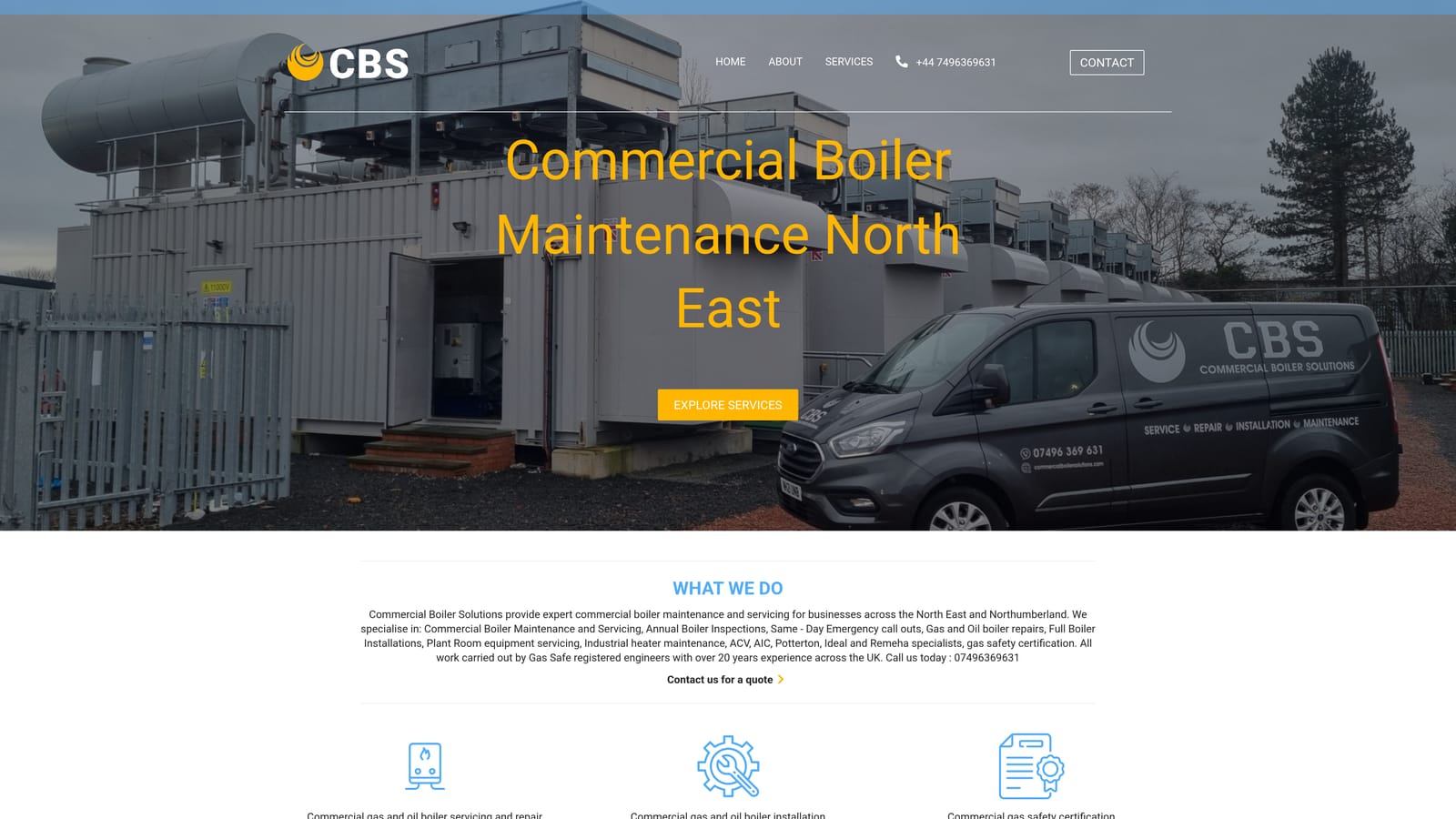
For gym operators, heating downtime in winter is not a minor inconvenience. Members expect a warm changing room and a comfortable facility regardless of the weather outside. Commercial Boiler Solutions offers same-day emergency callout across Newcastle, Sunderland, Middlesbrough, Tyneside, Wearside, Teesside, North Yorkshire, and Northumberland, which is a genuine differentiator for facilities that cannot afford extended outages.
Beyond reactive cover, planned maintenance contracts help gym operators stay ahead of breakdowns rather than reacting to them. Annual inspections also support compliance obligations under the Gas Safety (Installation and Use) Regulations 1998, which require that gas appliances in commercial premises are maintained in a safe condition by competent, registered engineers.
Gas Safe Registered Engineers: All gas work is legally compliant and carried out by registered engineers — verifiable on the Gas Safe Register.
Same-Day Emergency Callout: Available across the full North East and Northumberland service area, reducing heating downtime for gym operators.
Planned Maintenance Contracts: Tailored to commercial gym operators, with inspection schedules aligned to your facility's needs and regulatory requirements.
Gas Repairs and Component Replacement: Keeps existing boiler systems running efficiently without unnecessary full replacements.
5-Star Customer Rating: A track record of prompt, professional service across the commercial sector.
Commercial gym and leisure facility operators across North East England and Northumberland who need reliable, legally compliant maintenance and emergency cover for their existing gas heating systems. Particularly valuable for operators in older building stock where boiler reliability is a recurring concern.
Contact Commercial Boiler Solutions for a tailored maintenance contract quote. Emergency callout pricing is available on enquiry.
Best for: Gyms replacing ageing boiler plant and seeking higher seasonal efficiency from gas-fired wet heating systems.
Condensing commercial boilers are high-efficiency gas-fired units that recover latent heat from flue gases, delivering meaningfully higher seasonal efficiency than older non-condensing models. Manufacturers including Ideal, Remeha, Baxi, and Viessmann offer outputs suited to gyms of varying sizes.

Older non-condensing boilers exhaust a significant proportion of their heat energy through the flue. Condensing models recover much of that energy, reducing fuel consumption for the same heat output. For a gym running a boiler for many hours each day across a long North East heating season, the efficiency gains are meaningful over time.
Condensing boilers are also compatible with existing wet heating distribution systems, meaning they can often replace older plant without requiring a complete overhaul of pipework, radiators, or controls. That makes them a practical retrofit option for many existing facilities.
High Seasonal Efficiency: Recovers latent heat from flue gases that older boiler designs exhaust to atmosphere.
Wide Output Range: Units are available to suit gyms of varying floor areas and heating demands.
Wet System Compatibility: Works with existing radiator and underfloor heating distribution without requiring full system replacement.
Gas Safe Registered Installation Required: All installation, commissioning, and maintenance must be carried out by a Gas Safe registered engineer.
Long Service Life: With proper planned maintenance, modern condensing boilers offer reliable long-term performance.
Gym operators replacing end-of-life boiler plant who want to improve energy performance without changing their distribution system. Also suitable for new-build facilities where gas connection is available and a wet heating system is specified.
Capital cost varies by output and manufacturer. Installation and commissioning costs are additional. Contact a Gas Safe registered engineer for a site-specific quote based on your facility's heating load.
Best for: Open-plan gym floors, sports halls, and functional training areas with ceiling heights above 4 metres.
Gas-fired radiant tube heaters are overhead heating systems that warm people and surfaces directly rather than heating the entire air volume of a space. Widely used in sports halls and warehouse-style fitness facilities, manufacturers include Ambi-Rad, Schwank, and Roberts Gordon.
In a conventional gym with a 6-metre ceiling, a radiator-based system must heat an enormous volume of air before occupants at floor level feel comfortable. Warm air stratifies near the ceiling, wasting energy. Radiant tube heaters bypass this problem entirely by emitting infrared radiation that warms people and the floor surface directly, regardless of ceiling height.
This makes them particularly well-suited to the converted industrial units and older leisure centres common across the North East, where ceiling heights are often substantial and insulation may be limited. Zoning allows specific areas to be heated only when in use, which suits the variable occupancy patterns typical of commercial gyms.
Direct Radiant Heating: Warms occupants and floor surfaces without needing to heat the full air volume of a tall space.
Effective in High-Ceiling Environments: Particularly suited to spaces where conventional systems struggle to maintain comfortable floor-level temperatures.
Zone Control: Individual zones can be activated only when areas are in use, reducing energy waste during quiet periods.
Gas Safe Registered Installation Required: Gas-fired models must be installed and maintained by a Gas Safe registered engineer.
Suitable for Sports and Functional Training Areas: Unobtrusive overhead installation leaves floor and wall space clear for equipment.
Gyms with open-plan floors, high ceilings, or sports hall areas where conventional wet heating systems are impractical or inefficient. Also effective in functional training zones and combat areas with variable occupancy.
System cost depends on coverage area, ceiling height, and number of zones. A professional survey and installation quote is required before specifying.
Best for: Gyms prioritising carbon reduction and with low-temperature heat distribution systems in place or planned.
Commercial air source heat pumps are electrically driven systems that extract heat from outdoor air and deliver it to a building's heating and hot water circuits. Commercial-scale units from Mitsubishi Electric, Daikin, and Vaillant are suited to larger gym facilities, particularly those with underfloor heating or low-temperature radiator systems.

Heat pumps generate more heat output than the electrical energy they consume, making them more efficient than direct electric heating under the right conditions. For gyms with an eye on decarbonisation targets or energy cost management over the long term, they represent a credible alternative to gas boilers, particularly in new-build facilities where the distribution system can be designed around lower flow temperatures from the outset.
Performance is influenced by outdoor temperatures, so in the colder North East winters, system design and sizing are particularly important. A well-designed installation by qualified engineers will account for local climate conditions and peak heating demand.
Efficient Heat Generation: Produces more heat output than the electrical energy consumed, under appropriate operating conditions.
Reduced Direct Carbon Emissions: Eliminates on-site fossil fuel combustion, supporting decarbonisation objectives.
Compatible with Low-Temperature Systems: Works well alongside underfloor heating and appropriately sized low-temperature radiator systems.
Potential Government Incentives: UK incentive schemes may be available — verify current eligibility via official government guidance from DESNZ.
Professional Design and Installation Required: Correct sizing and commissioning by qualified engineers is essential for efficient operation.
New-build gym facilities or major refurbishments where the distribution system can be designed for low flow temperatures. Also suited to operators with a clear decarbonisation strategy and access to competitive electricity tariffs.
Capital costs are higher than gas boilers. Running costs depend on electricity tariff and system design. Finance options may be available from some manufacturers and installers.
Best for: Changing rooms, yoga studios, reception areas, and other comfort-critical spaces within gym facilities.
Commercial underfloor heating distributes heat evenly across floor surfaces through wet (water-based) or electric systems. Manufacturers including Rehau, Uponor, and Warmup supply commercial-grade systems suited to leisure and fitness environments.

Underfloor heating delivers warmth from the ground up, creating an even temperature distribution without the hot spots associated with radiators. In changing rooms and studio spaces, where members are barefoot or close to the floor, the comfort difference is noticeable. It also removes the need for wall-mounted radiators, freeing space for lockers, mirrors, and equipment.
Wet underfloor heating operates at lower flow temperatures than conventional radiator systems, which improves the efficiency of condensing boilers and makes it an ideal partner for air source heat pumps. This compatibility with multiple heat sources adds long-term flexibility as facilities consider future upgrades.
Even Heat Distribution: No hot spots or cold corners — consistent floor-level warmth across the entire heated zone.
Low Flow Temperature Operation: Wet UFH improves the efficiency of condensing boilers and heat pumps by operating at lower temperatures.
Space Saving: Eliminates wall-mounted radiators in heated zones, freeing space for other uses.
Ideal for Comfort-Critical Spaces: Particularly effective in changing rooms, studios, and reception areas where underfoot comfort matters.
Best Installed During Construction or Major Refurbishment: Retrofitting wet UFH into an existing floor is a significant undertaking and requires careful planning.
New-build gym facilities or major refurbishment projects where floor access is available. Wet UFH is the preferred specification for changing rooms and studio spaces; electric UFH may suit smaller isolated zones where wet pipework is impractical.
Wet UFH installation costs vary significantly by floor area and system specification. Electric UFH carries lower capital cost but higher running costs. Assess whole-life cost before specifying electric systems for large areas.
Best for: Managing air quality, humidity, and temperature in high-occupancy gym environments while reducing ventilation heat loss.
Mechanical ventilation with heat recovery systems extract stale air from a building and transfer its heat to incoming fresh air before the extracted air is exhausted. Manufacturers including Zehnder, Vent-Axia, and Nuaire supply commercial-grade systems for leisure and fitness applications.

Gyms generate CO2, moisture, and odour at rates far above most commercial buildings. Adequate ventilation is non-negotiable for member comfort and air quality compliance, but ventilating without heat recovery means continuously exhausting warm air and paying to heat cold replacement air. MVHR addresses this directly by recovering a substantial proportion of the heat from extracted air before it leaves the building.
In indoor cycling studios, combat zones, and pool-adjacent areas where humidity and CO2 levels peak rapidly, MVHR is particularly effective. It also reduces condensation on walls and ceilings, lowering the risk of damp and associated maintenance costs over time.
Heat Recovery from Extracted Air: Transfers warmth from stale outgoing air to incoming fresh air, reducing the energy needed to heat ventilation supply.
Air Quality Management: Controls CO2, humidity, and odour in high-occupancy spaces without sacrificing thermal comfort.
Condensation Reduction: Balanced ventilation reduces moisture build-up on cold surfaces, protecting the building fabric.
Zone-Level Application: Can be specified for the whole facility or for high-intensity zones such as cycling studios and combat areas.
Professional Design Required: Airflow rates must be balanced with occupancy levels and activity types to achieve the intended performance.
New-build gym facilities and major refurbishments where ductwork can be incorporated into the building design. Particularly valuable for high-intensity studio spaces and any area with elevated humidity or CO2 generation.
System cost depends on facility size, number of zones, and ductwork complexity. Professional design and installation are required. Obtain quotes based on a full airflow assessment of your facility.
Best for: Gym operators looking to reduce energy waste in existing heating systems without major capital expenditure on new plant.
Smart building controls and programmable heating management systems allow gym operators to schedule, zone, and optimise heating based on actual occupancy patterns. Options range from full building management systems (BMS) from suppliers such as Honeywell, Siemens, and Schneider Electric to simpler programmable controls from manufacturers such as Drayton and Heatmiser.
Many gyms run their heating systems on a fixed schedule that bears little resemblance to actual occupancy. Changing rooms need to be warm before the morning rush, but heating them at the same level throughout a quiet mid-morning period wastes energy. Smart controls allow heating schedules to be aligned precisely with class timetables, opening hours, and observed occupancy patterns.
Zone control adds a further layer of efficiency: the gym floor, changing rooms, reception, and studios can be heated independently, with each zone following its own schedule. Remote monitoring via app or web interface allows managers to adjust settings without being on-site, which is particularly useful for multi-site operators across the North East.
Occupancy-Based Scheduling: Aligns heating output with gym opening hours, class timetables, and peak usage periods.
Zone Control: Heats changing rooms, studios, and gym floors independently according to their individual requirements.
Remote Monitoring and Adjustment: App and web interfaces allow off-site management and real-time adjustments.
Retrofit Compatibility: Can be added to most existing heating systems without replacing boiler plant or pipework.
Inefficiency Identification: Highlights patterns in existing heating schedules that may be generating unnecessary energy consumption.
Any gym operator with an existing heating system that is not currently optimised for occupancy. Particularly valuable for multi-site operators and facilities with complex class timetables where heating demand varies significantly throughout the day.
Simple programmable thermostats start from a few hundred pounds. Full BMS installation varies widely depending on facility size, number of zones, and system complexity. Obtain a site-specific assessment before specifying.
Best for: Larger leisure facilities with space for fuel storage and a clear decarbonisation objective where gas replacement is a priority.
Commercial biomass boilers burn wood pellets or wood chip to provide renewable heat for larger facilities. Manufacturers including Froling, Windhager, and ÖkoFEN supply automated commercial systems suited to leisure centre-scale installations.
For facilities where the gas supply is costly, limited, or where the operator has made a firm commitment to removing fossil fuels from their heating system, biomass offers a proven alternative. Wood pellet systems in particular can be highly automated, with fuel delivered to a silo and fed to the boiler without manual intervention, making day-to-day operation comparable to a gas boiler in terms of convenience.
The principal constraints are practical: a pellet silo or chip store requires dedicated space, and a reliable local fuel supply chain must be established before committing to the technology. For larger leisure facilities in rural parts of Northumberland or North Yorkshire where agricultural biomass suppliers operate, the supply chain question may be easier to resolve than in dense urban areas.
Renewable Fuel Source: Wood pellet and chip fuels are considered carbon-neutral when sourced from sustainably managed forests.
Gas Replacement Potential: A viable alternative to gas boilers where decarbonisation or gas supply constraints make this a priority.
Automated Fuel Feed: Commercial systems include automated feed mechanisms that reduce manual intervention requirements.
Dedicated Storage Required: Pellet silos or chip stores need to be factored into site planning from the outset.
Specialist Installation and Maintenance: Requires qualified engineers experienced in biomass systems, separate from gas heating competencies.
Larger leisure facilities with available storage space, a clear decarbonisation strategy, and access to a reliable local fuel supply. Less suited to smaller urban gyms with limited plant room and storage space.
Capital costs are higher than gas boilers. Fuel costs vary by region and supply contract. Check current government renewable heat incentive status with official sources before making financial projections.
Best for: Supplementary or spot-heating in specific zones where running pipework is impractical or where instant warmth is needed.
Infrared electric heating panels are wall or ceiling-mounted units that emit infrared radiation to warm people and surfaces directly. Manufacturers including Herschel, Infralia, and Redwell supply commercial-grade panels for a range of applications.
Infrared panels are not a primary heating solution for a commercial gym, but they fill a genuine gap. In areas where running wet pipework is impractical, such as a covered outdoor stretching area, a reception desk in a listed building, or an isolated studio space added to an existing facility, electric infrared panels offer a clean, low-disruption installation with no pipework, no boiler connection, and no warm-up period.
The instant-heat characteristic is useful in spaces that are used intermittently. A stretching or cool-down zone that is occupied for short periods benefits from a panel that delivers warmth immediately rather than one that needs to pre-heat the space. The trade-off is running cost: electricity currently costs more per unit of heat delivered than gas, so infrared panels should be specified as a supplement to, not a replacement for, the primary heating system.
No Pipework Required: Electrical installation only, making it straightforward to add to existing spaces without major building works.
Instant Heat Output: No warm-up period — effective immediately on activation.
Flexible Application: Suited to covered outdoor areas, reception desks, stretching zones, and isolated spaces where wet heating is impractical.
Low Maintenance: No moving parts or wet system components to service.
Higher Running Costs than Gas: Electricity is more expensive per unit of heat than gas in most UK tariff structures — factor whole-life cost into the specification decision.
Supplementary heating in specific zones where wet pipework is not viable. Not recommended as a primary heating source for large gym floor areas due to running cost implications at scale.
Panel capital costs are relatively modest. Running costs depend on electricity tariff and hours of use. Calculate whole-life cost carefully before specifying for anything beyond targeted supplementary heating.
No single technology suits every gym. The right combination depends on your building type, existing infrastructure, decarbonisation ambitions, and budget.
Retrofitting an existing gas-heated gym: Start with smart controls and planned maintenance to optimise what you already have. Replacing ageing boiler plant with a modern condensing unit is typically the most cost-effective capital investment. If your facility has high ceilings and an open gym floor, radiant tube heaters are worth serious consideration alongside or instead of a conventional wet system.
New-build or major refurbishment: Specify MVHR for ventilation from the outset, incorporate wet underfloor heating in changing rooms and studios, and consider whether an air source heat pump or biomass boiler aligns with your long-term energy strategy. Smart controls should be standard specification, not an afterthought.
Smaller gym or tight budget: Prioritise boiler maintenance and smart controls. These deliver meaningful efficiency improvements without large capital outlay. Infrared panels can address specific spot-heating needs without major works.
Whatever heating technologies you operate, any gas work must be carried out by a Gas Safe registered engineer. You can verify engineer registration on the Gas Safe Register. If you ever suspect a gas leak at your facility, evacuate the area immediately and call the National Gas Emergency Service on 0800 111 999.
For gym and leisure facility operators across Newcastle, Sunderland, Middlesbrough, Tyneside, Wearside, Teesside, North Yorkshire, and Northumberland, Commercial Boiler Solutions offers Gas Safe registered maintenance contracts, annual inspections, and same-day emergency callout to keep your heating system running reliably through the North East winter. Learn more about our services and get in touch to discuss a maintenance contract tailored to your facility.