
Choosing a reliable boiler maintenance company is harder than it looks, because every contractor claims to be one. This list is for facility managers and property owners across the North East who need to appoint or review a contractor for commercial gas plant. It combines a local maintenance provider with the verification, accreditation, review and record-keeping tools used to vet and monitor one. Tools were chosen for relevance to UK commercial gas compliance, free or low-cost access, and independence from the contractor being checked.
Commercial Boiler Solutions is the only provider on this list that actually maintains your boilers, and it is our own service, so weigh this entry with that in mind. It is a Gas Safe registered commercial boiler maintenance company covering the North East and Northumberland, including Newcastle, Sunderland, Middlesbrough, Tyneside, Wearside, Teesside and North Yorkshire. It is designed for commercial property owners and facility managers who want one local contractor for planned work and breakdowns.
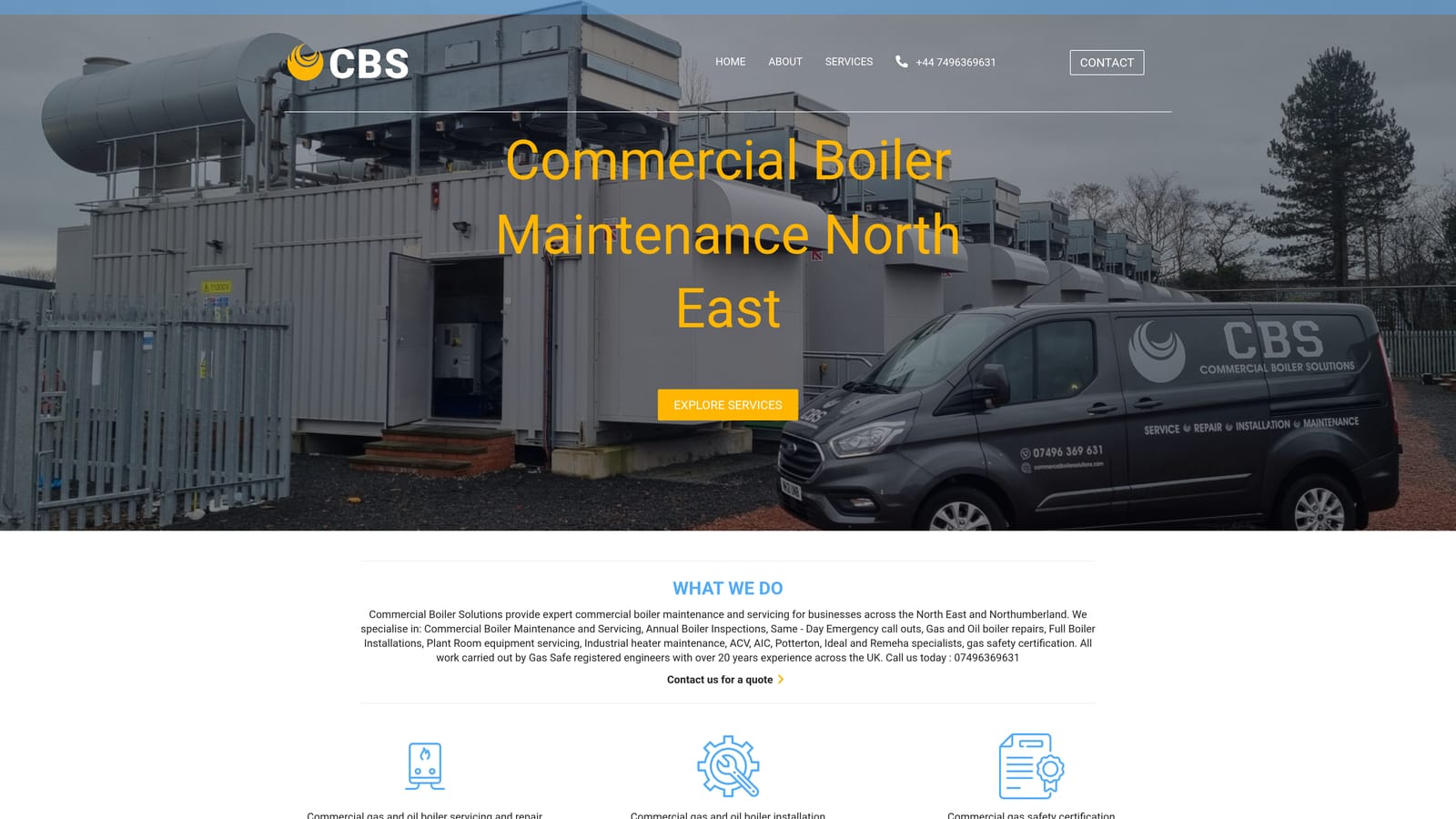
Its distinguishing strength is local Gas Safe registered engineers offering same-day service. For a site that loses heating during a North East January, travel time from an engineer's base matters more than most contract clauses. The company holds a 5-star customer rating.
No software integrations apply here; setup is a site survey and a quote, and your day-to-day contact is the engineer or office team rather than a platform you administer. The limitation is geography: coverage is regional, so it does not suit multi-site estates outside the North East. Pricing is quote-based and depends on the number and type of boilers, the maintenance frequency and the scope of cover.
Any gas work must be done by a Gas Safe registered engineer. If you suspect a gas leak, leave the area and call the National Gas Emergency Service on 0800 111 999.
Best for: Commercial property owners in the North East wanting a single local maintenance and emergency provider.
The Gas Safe Register is the UK's official register of gas engineers, and its free online checker is the first test any contractor should pass. You can look up a business or an individual engineer, and it is aimed at anyone appointing someone to work on gas.
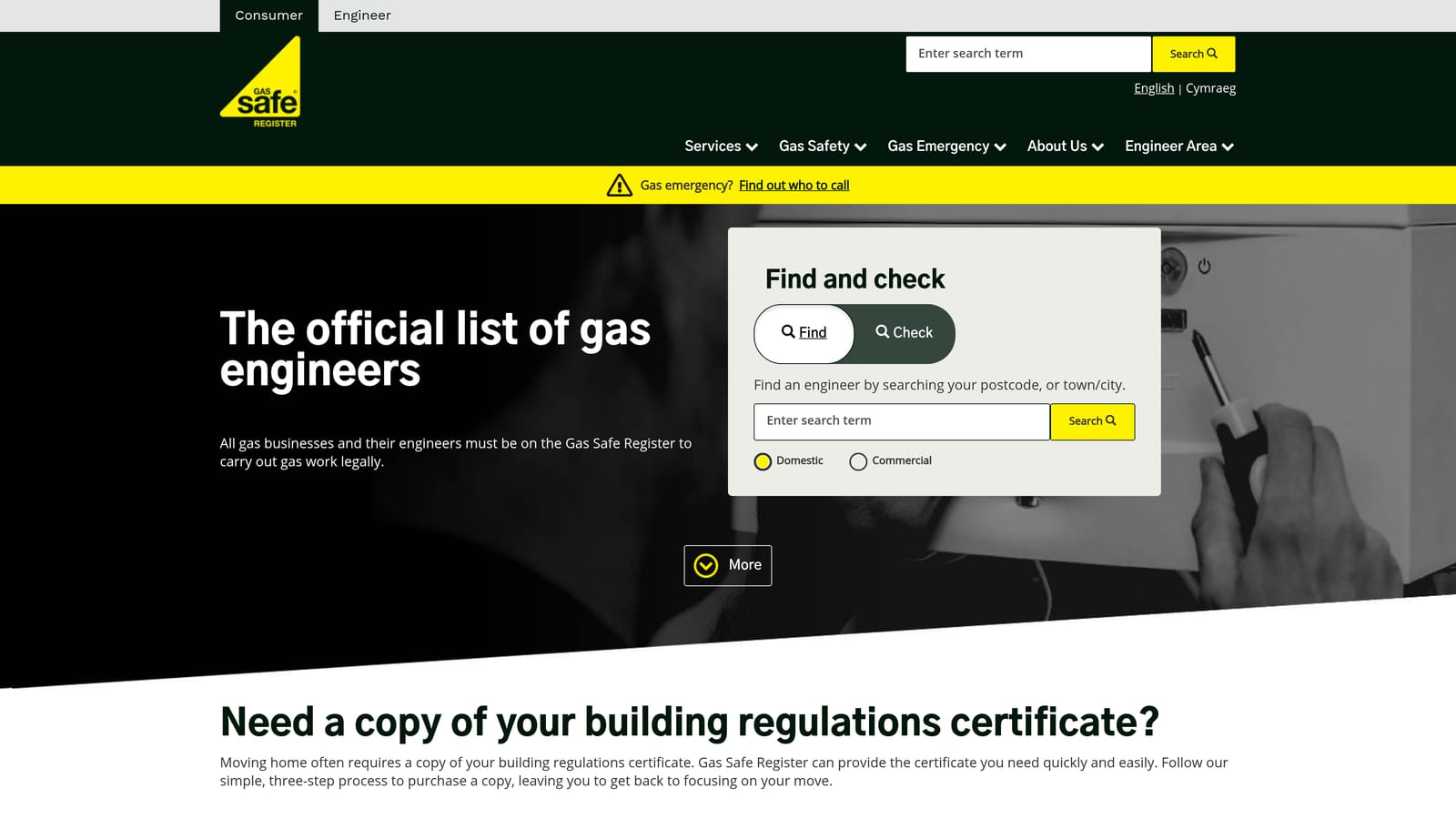
What sets it apart from everything else here is that it is the legal check. It confirms whether an engineer may lawfully work on gas and in which categories. That detail matters in commercial settings: a common misconception is that registration covers every appliance, when an engineer's ID card lists the specific types of work they are qualified for. Check that commercial categories appear, not just domestic ones.
There is nothing to integrate and no setup; whoever manages contractors can run a check in minutes. The limitation is plain: it confirms registration, not service quality, response times or value. A firm can be fully registered and still be slow to attend. Use it as a gate, then apply the other tools. It is free to use.
Best for: Verifying legal competence before any contractor touches gas plant.
BESA is a trade association for building engineering services contractors. It publishes a member directory alongside industry guidance, and suits buyers who want some sign that a contractor takes wider standards seriously.
Its distinctive value is that it is sector-specific. Unlike general safety schemes, it represents building services firms, so membership says something about a contractor's place in the industry rather than just its paperwork.
There are no integrations and little setup: you search the directory and contact firms directly. The main limitation is that membership is voluntary, so many capable local firms are not listed, and absence from the directory is not a mark against a contractor. Membership also does not replace a Gas Safe check. For contractors, joining carries a fee; for buyers, searching is straightforward. Check the website for current details as of 2026.
Best for: Buyers who want evidence of commitment to wider industry standards.
SafeContractor is a contractor health and safety accreditation scheme run by Alcumus, with a searchable list of assessed contractors. It is designed for organisations that must demonstrate they appointed contractors with care.
Its distinguishing feature is the review of a contractor's safety management documents. That supports your own duties under the Health and Safety at Work Act 1974 when you bring contractors onto site, which is why many corporate safety policies require it.
It sits within the wider Alcumus platform, and setup for a buyer is mostly searching and checking status. Whoever owns health and safety or procurement normally runs it. The limitation is that it does not assess boiler engineering skill: an accredited firm has good paperwork, not necessarily good workmanship. Pricing for contractors and any buyer-side services is not fixed here, so check the website for current terms as of 2026.
Best for: Organisations whose safety policy requires accredited contractors on site.
Constructionline is a UK pre-qualification register of suppliers used in public and private sector procurement. It targets buyers running formal selection processes who would otherwise send the same questionnaire to every bidder.
Its edge over the safety schemes is breadth: one pre-qualified record combines financial and compliance checks, so you can assess a supplier's stability as well as its safety paperwork.
It connects to procurement portals, so it fits best where a procurement team already works through formal systems. Setup is heavier than the other verification tools, and it is usually run by procurement rather than facilities. The limitation is that it is built for formal procurement, and smaller specialist firms may not be listed. Like the other schemes, it says nothing about engineering skill. Membership tiers determine cost for suppliers; confirm current details on the website as of 2026.
Best for: Public sector and larger organisations running formal tender processes.
CHAS is a contractor health and safety assessment scheme with a searchable database of accredited contractors. It is aimed at buyers who need a recognised, widely accepted accreditation.
Its practical advantage is recognition. Many clients and insurers already accept it, so if your insurer or a head-lease client names CHAS, a CHAS-accredited contractor removes a point of friction.
Be careful with the accreditation myth here: it checks safety paperwork, not workmanship. A contractor can hold CHAS and still be slow to repair a failed burner. Treat it as one filter among several.
It links with supply chain platforms. Day-to-day use is light for a buyer: search, check status, record it. Costs fall mainly on contractors and depend on the scheme level, so confirm current information on the website as of 2026.
Best for: Buyers whose insurer or client already specifies CHAS.
Trustpilot is a public review platform where customers rate businesses and companies can reply. It is the quickest way to see how a shortlisted contractor treats customers once the paperwork checks are done.
Its value is independent feedback. Read for patterns rather than single scores: how quickly emergency calls were answered, whether invoices matched quotes, and how the company responded to complaints. A firm that replies calmly and specifically to criticism tells you something.
There is no integration and no setup. The limitations are real: many small commercial heating firms have few reviews, and reviews cannot verify gas competence. Reviews from domestic customers may also say little about commercial contracts. Reading is free.
Best for: Sense-checking a shortlisted contractor's customer experience.
UpKeep is maintenance management software for work orders, scheduling and asset records. Unlike the tools above, it does not help you choose a contractor. It helps you see whether the one you chose is delivering, which is how reliability gets proved over time.
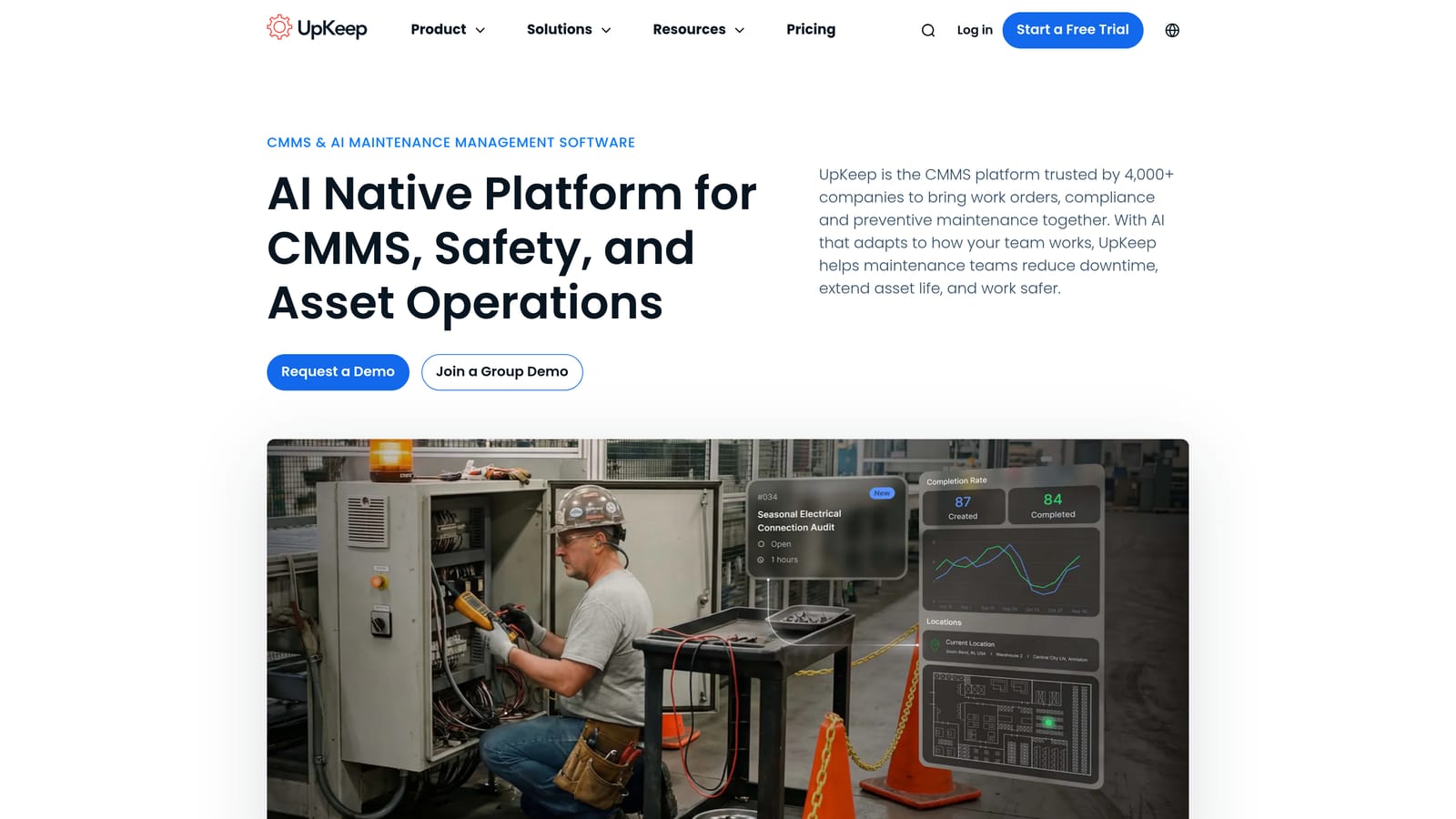
Its distinguishing quality is simple, mobile-first scheduling. A facility manager can log a boiler service date, attach the certificate and see at a glance what is overdue.
Integrations vary, so check the website for current options. Setup means entering your assets and schedules, and a facilities or maintenance lead typically runs it day to day. The limitation is its role: it tracks contractor performance and does not vet contractors, and it does not replace a Gas Safe check. Pricing is not quoted here; it commonly depends on the plan and number of users, so confirm current figures as of 2026.
Best for: Single-site and small multi-site managers logging service dates and callouts.
Fiix is a cloud CMMS (computerised maintenance management system) from Rockwell Automation for maintenance planning and asset management. It is designed for larger estates with many assets and technicians.
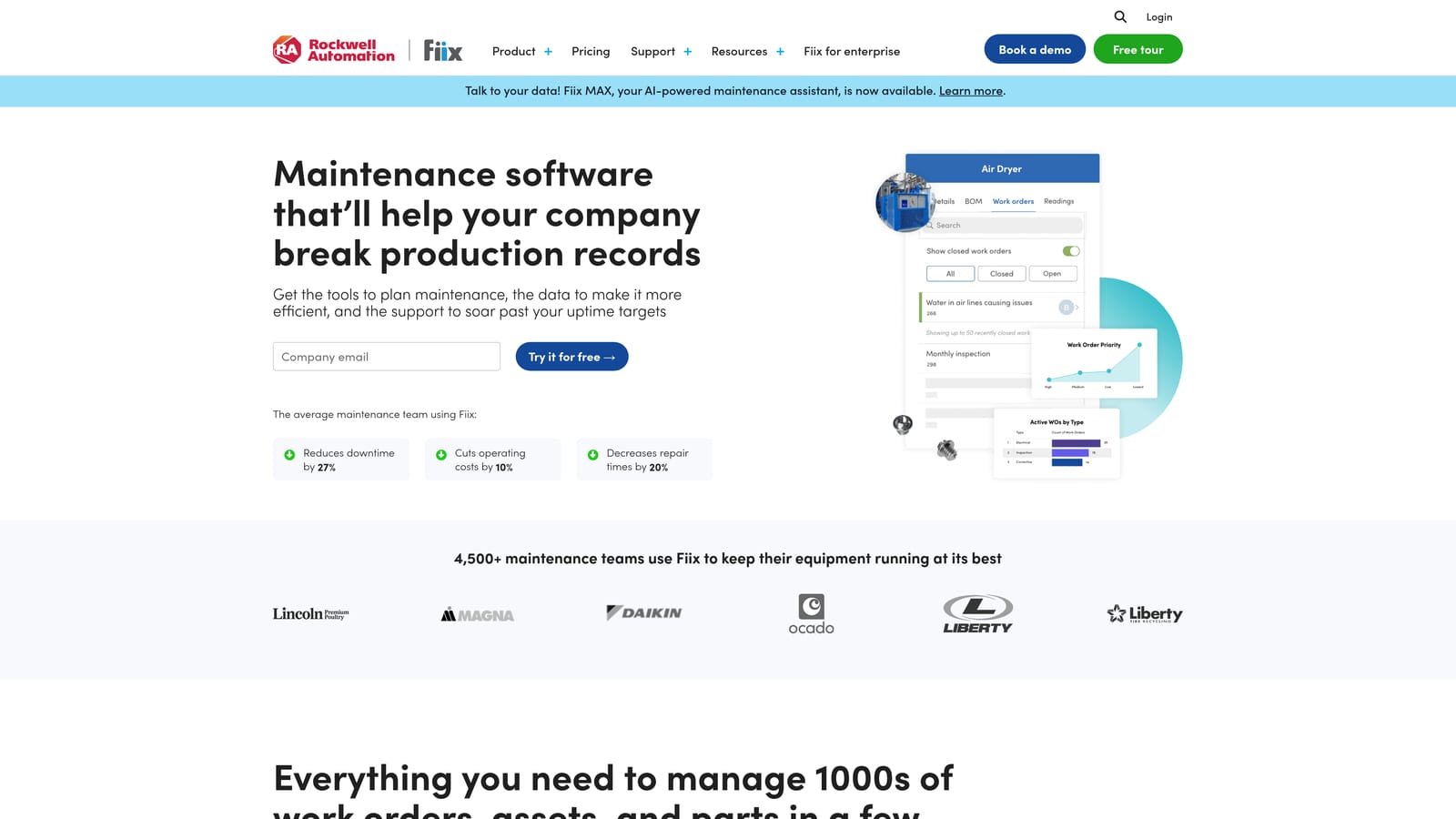
Its strength is depth of asset history and reporting. Across many sites, repeat failures hide in scattered paperwork; Fiix lets you see that the same circulation pump has failed three times, which is useful evidence in a contractor review.
Check the website for current integrations. Setup is a larger project than UpKeep, with asset data to import and users to train, and it usually needs a dedicated maintenance or systems owner. The limitation is scale: it is more than a single-site owner typically needs. Pricing is not stated here and generally depends on the plan and user numbers, so confirm details as of 2026.
Best for: Larger estates with many assets and technicians.
No single tool proves reliability, so combine them. Start with the Gas Safe Register for the legal check, and confirm the commercial categories on the engineer's ID card. Gas work must only be done by a Gas Safe registered engineer, and you can verify registration on the Gas Safe Register at any time. If you smell gas, leave the area and call the National Gas Emergency Service on 0800 111 999.
Remember that accreditation is not engineering quality, and the cheapest quote is not always the best value. If you would like to discuss annual inspections, planned maintenance or emergency cover for your premises, Learn more about our services.