
This list is for workshop owners, landlords and facility managers choosing, replacing or maintaining heating in commercial units, with a North East slant on climate and servicing. The tools were chosen for suitability to workshops with high ceilings and roller doors, safety and ventilation requirements, running-cost profile, UK availability and the support behind each product. There is no single best heater, so match the option to your building volume, door use and fuel supply.
Commercial Boiler Solutions is a Gas Safe registered service provider rather than a heater manufacturer. It looks after the commercial gas boilers and wet heating systems that already warm many workshops and mixed-use units across Newcastle, Sunderland, Middlesbrough, Tyneside, Wearside, Teesside, Northumberland and North Yorkshire. It is designed for owners and facility managers who want the system they have to run safely and reliably through a North East winter.
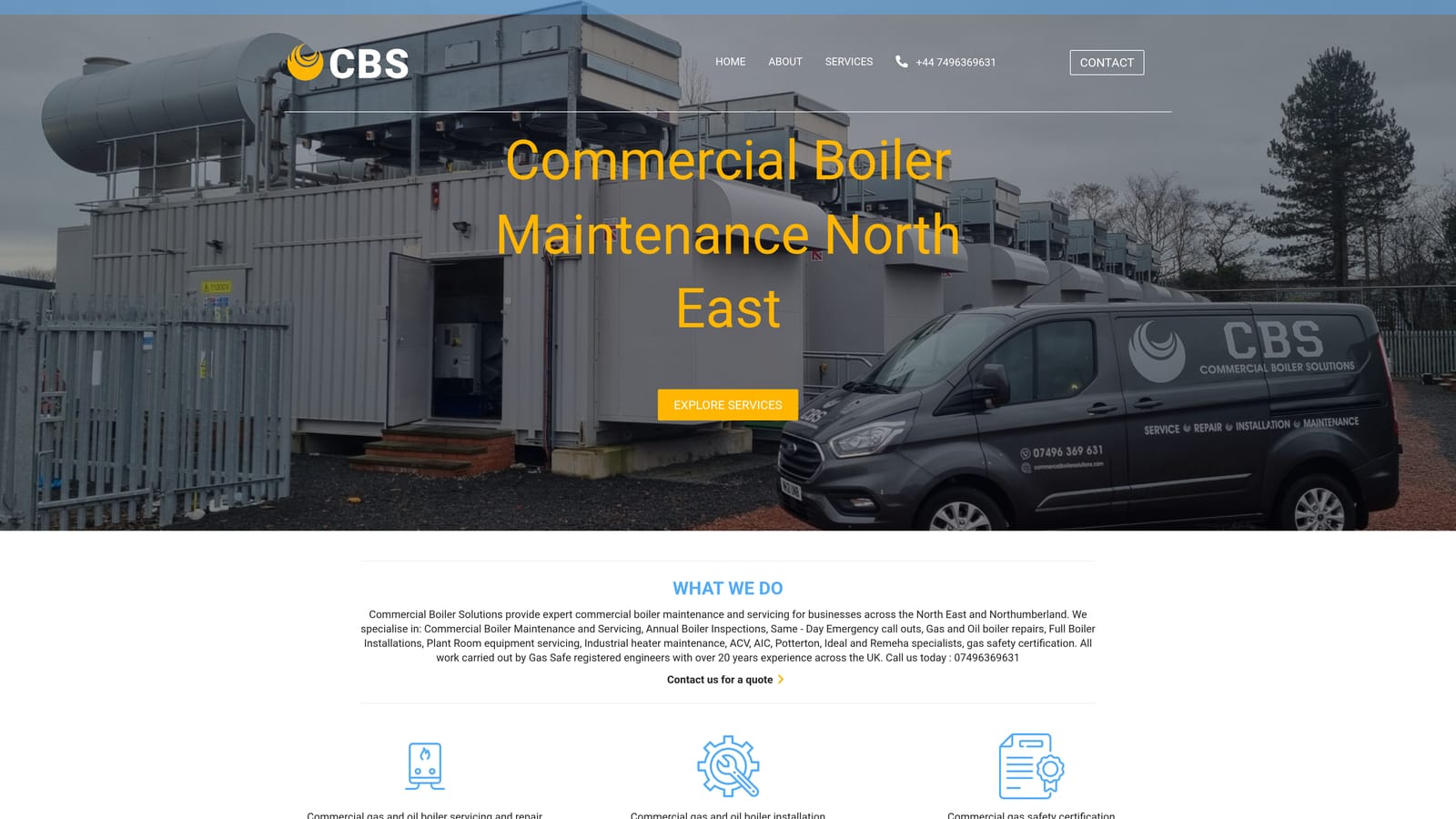
Its distinctive strength on this list is the support layer. Most other entries here are products you buy; this is the engineering cover that keeps a boiler-fed system compliant and working, with same-day emergency response and a 5-star customer rating.
It works on commercial gas boiler and wet heating systems, so setup is a matter of arranging a survey or service visit, and the engineers do the work; your team does not need to touch the boiler. The limitation is plain: it does not supply heaters, so it does not suit electric-only workshops or those relying on portable units. It also cannot make an undersized or poorly insulated system efficient by servicing alone.
Pricing is quote-based and depends on the number and type of boilers, the scope of servicing and the contract you choose. Gas work must always be done by a Gas Safe registered engineer, and you can check anyone's registration on the Gas Safe Register.
Best for: Workshops and mixed-use units already heated by a commercial gas boiler.
Powrmatic is a UK manufacturer of gas-fired warm air and radiant heating for industrial and commercial buildings. Its core appeal for workshops is indirect-fired warm air: combustion gases are carried away through a flue, and only clean heated air enters the space. That makes it suitable for whole workshop volumes served from a single unit.
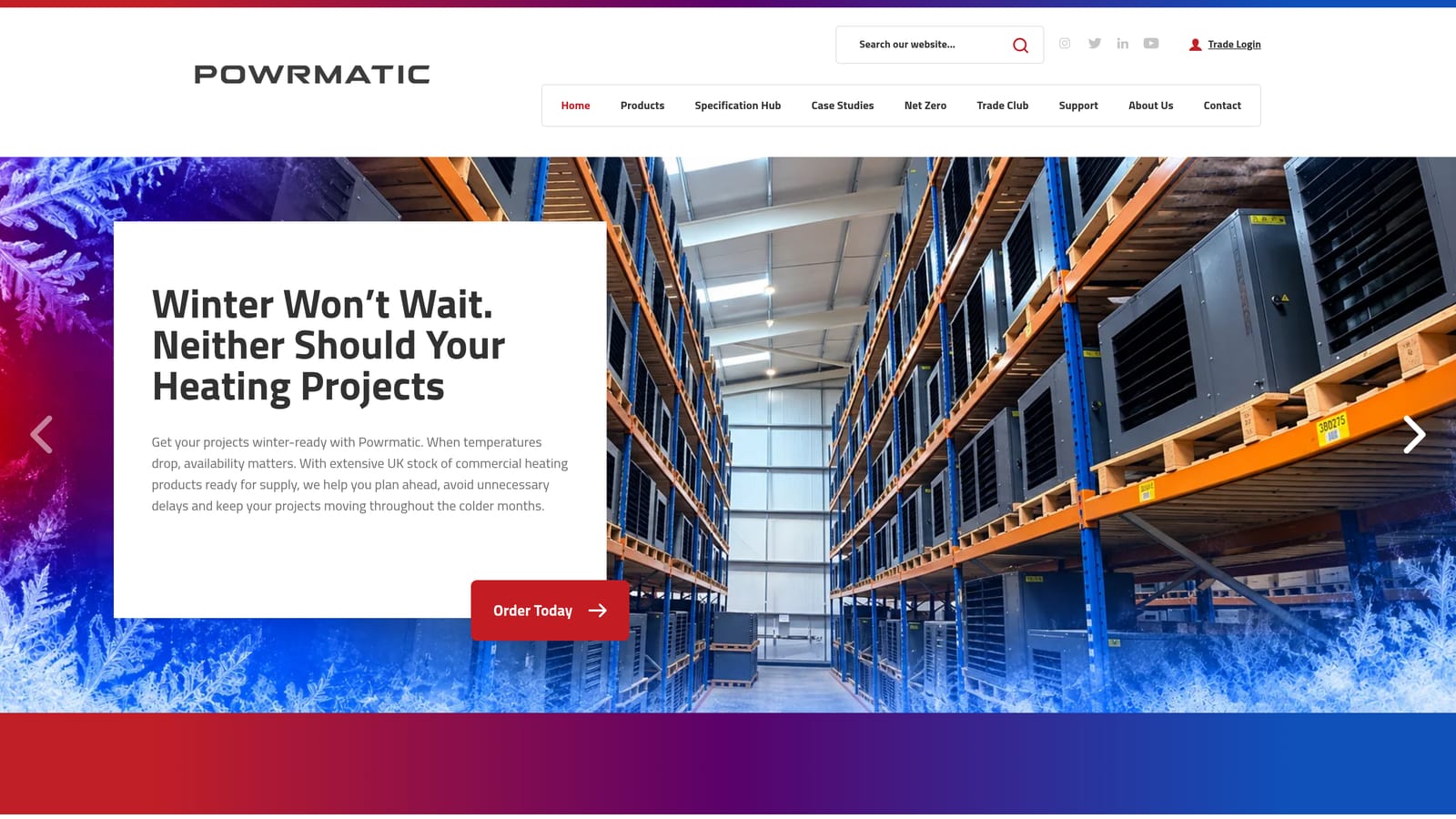
Compared with the others here, it is the most natural fit when you want even air temperature across a large, open floor rather than spot warmth.
Controls can link to building management systems, though you should verify current options with the manufacturer. Setup is not a casual job: it needs a gas supply, flue routing and professional design and installation, and the work must be done by a Gas Safe registered engineer. Day-to-day running usually sits with the facilities team through a thermostat or timer, with annual servicing by a qualified engineer.
It does not suit units without a gas supply, or small spaces where a large installation would be disproportionate. Bigger output is not automatically better: oversizing wastes fuel and cycles the heater unnecessarily. Pricing is quote-based and varies with building volume, output required, flue arrangements and controls.
Best for: Large open workshops needing whole-space warm air.
Reznor UK supplies suspended gas-fired unit heaters and related commercial heating for workshops and warehouses. A unit heater hangs from the ceiling or roof structure and blows warm air downward with a fan, which is why it appeals where floor and wall space are already taken by machinery, benches and vehicle bays.
The distinguishing point against the rest of the list is footprint. Compact, ceiling-hung units keep the floor clear, so you can heat a layout that changes or is crowded without building heating around it.
Thermostat and controller options exist, but check the current range. Installation needs a competent installer, a gas connection and proper flueing or ventilation as the model requires, all by Gas Safe registered engineers. Fan-driven air can stir up dust, which is a drawback in finishing or woodworking areas, and it is less effective where doors stay open for long periods because warm air is pushed out as fast as it is delivered.
Pricing is quote-based and moves with the number of units, output and installation complexity.
Best for: Space-constrained workshops and vehicle bays that need floor space.
Ambirad makes gas-fired radiant tube and plaque heaters for high-bay industrial and commercial spaces. Radiant heaters work like sunshine: they warm people, floors and machinery directly rather than heating the air first. In a building where a roller door opens every few minutes, that distinction matters, because the warmth is not lost with the air.
That is what sets it apart here. Where a warm air system fights every door opening, radiant heat keeps people comfortable even when the air itself is cool.
Zone controls let you heat only occupied areas; verify current options with the manufacturer. Design is the key effort. Heat is directional, so layout and mounting height need careful planning, and obstructions such as racking or large machinery can cast shadows and leave uneven warmth. Installation and any flue or ventilation provision must be done by a Gas Safe registered engineer.
It is a weaker choice for low-ceilinged rooms, or where the aim is a uniform air temperature for sensitive materials. Pricing is quote-based and depends on the number of heaters, tube length, controls and installation.
Best for: Tall, draughty workshops with frequent door opening.
Herschel Infrared is a UK-based manufacturer of electric infrared heaters for commercial and industrial buildings. Like gas radiant systems, infrared warms people and surfaces rather than the air, but it does so electrically, with no combustion and no flue.
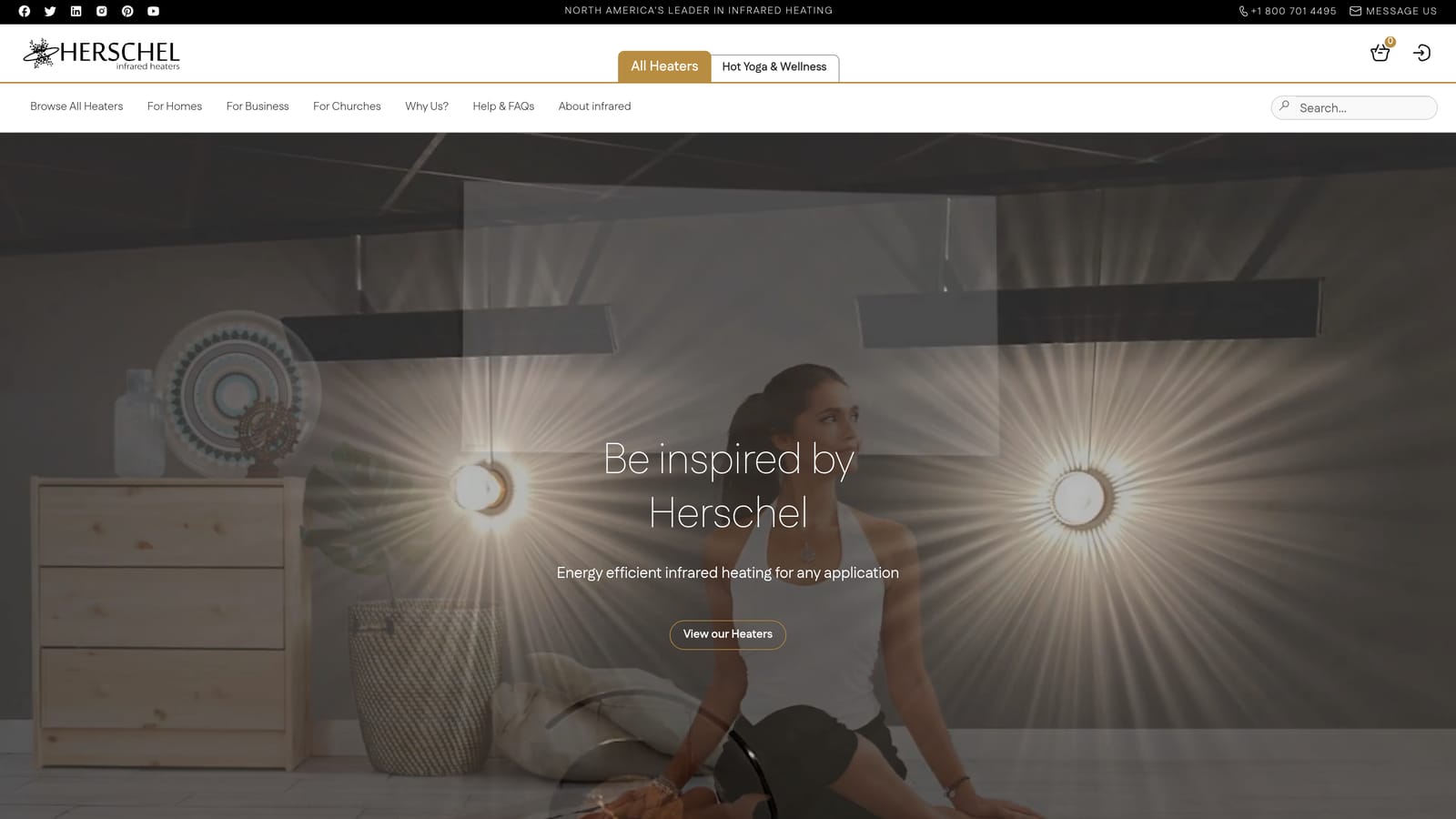
Its standout feature on this list is that it needs no gas supply at all. That makes it practical in leased units where gas is not connected or where changes to the building are restricted.
Installation is typically simpler than a flued gas system, though electrical work should be done by a qualified electrician and the supply capacity checked first. Day-to-day, your team sets timers and thermostats.
The limitations are about cost and scale. Running costs depend on your electricity tariff, and electric heat is not always cheaper to run than gas, whatever the installation saving. It is best used for zones rather than to heat large air volumes in a poorly insulated building. Pricing is quote-based and moves with the number of heaters and their output.
Best for: Small or leased units and workstation zone heating without gas.
Dimplex is a well-known UK brand with a commercial electric heating range that includes wall-mounted fan heaters and fixed units. The attraction is simplicity. There is no gas, no flue and little design work, so it suits stores, welfare areas, offices within a unit and small workshops.
Against the rest of this list, it offers the lowest capital outlay and the least complexity, which is useful when heating is only needed for short periods.
Built-in thermostats and timers are available on many models; verify per model. There is no integration with building systems to speak of, and no servicing regime beyond routine checks and cleaning, so facility managers can run it with little specialist input.
The main limitation is running cost over long hours. Electric resistance heating can become uneconomical for large or poorly insulated workshops used all day, and cheap to buy does not mean cheap to run. Pricing is listed on the manufacturer's website; it varies by model and output.
Best for: Small units with short heating hours or supplementary heat.
Daikin UK offers air source heat pump and air-to-air systems for commercial buildings that can both heat and cool. A heat pump moves heat from outside air into the building rather than generating it by burning fuel, so it delivers more heat per unit of electricity than direct electric heaters.
Its distinctive value here is efficiency and a route to lower on-site carbon, which matters if your organisation has decarbonisation targets or you expect to phase out gas.
Building management system connectivity is available; verify current options. Setup is a design exercise: heat load calculations, outdoor unit siting, electrical capacity and sometimes planning or noise considerations. Installation should be by a suitably qualified installer, and servicing is generally annual. Check any current grant or funding schemes before committing, as they change.
The limitations are upfront cost and fit. Heat pumps need good insulation and careful sizing, and they struggle in a draughty workshop where doors are often open. Pricing is quote-based and moves with capacity, the number of units and the electrical work required.
Best for: Well-insulated workshops planning a low-carbon transition.
Clarke International is a brand sold through Machine Mart that offers portable workshop heaters, including fuel-burning and electric models. These are the units you can buy, carry in and switch on, with no installation project.
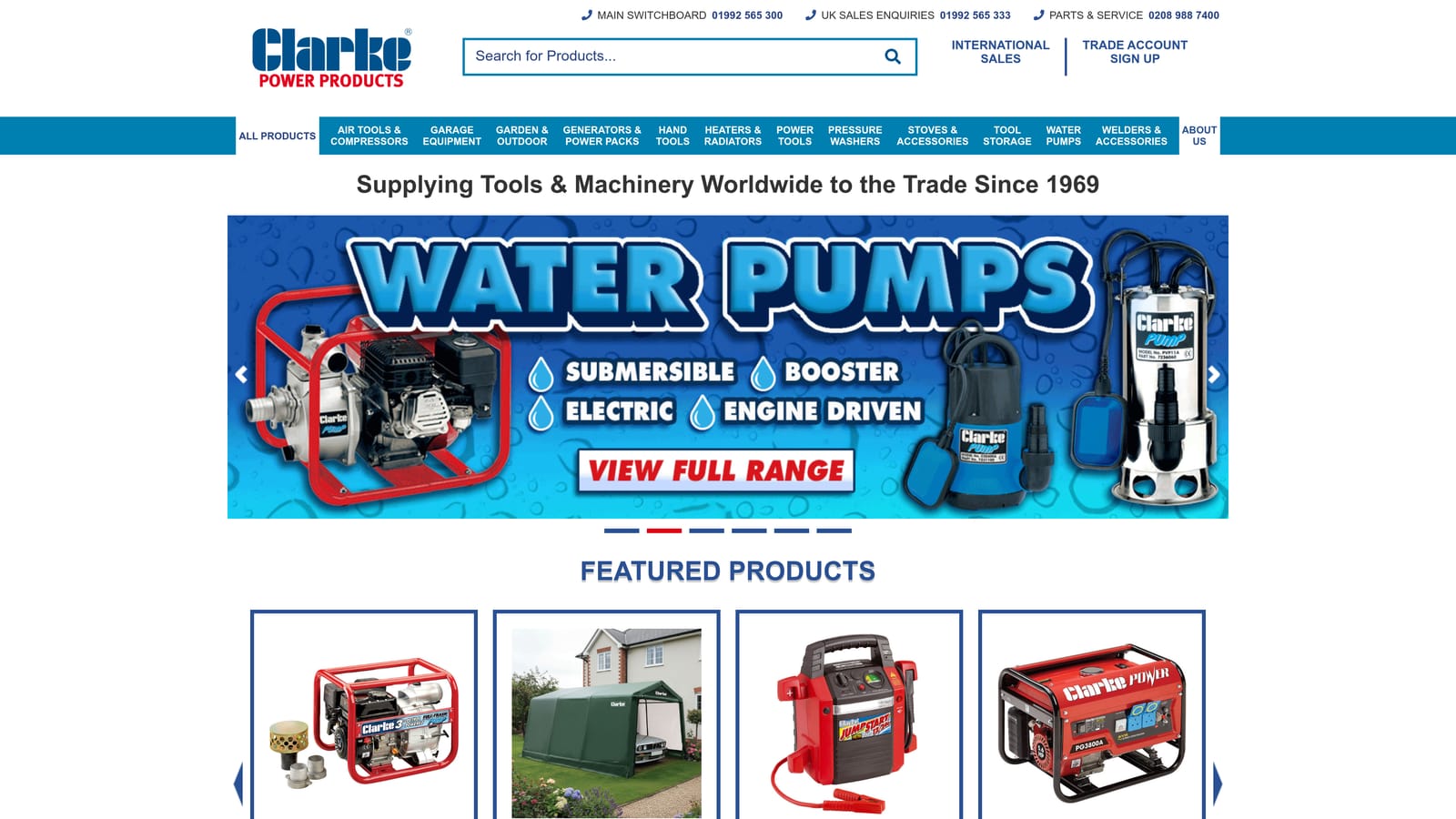
That portability is what distinguishes it from the permanent systems above: it can be moved into place at short notice as temporary or backup heating, for example while a boiler is awaiting repair.
These are standalone units with no integrations, and your own team runs them. The safety caveats are significant. Combustion models produce carbon monoxide and need adequate ventilation, a working carbon monoxide alarm and careful fuel handling and storage. Portable combustion heaters are not safe in a closed unit simply because they are small. Follow the manufacturer's instructions and your risk assessment.
They are not a permanent whole-building solution and are costly to run as a main heat source. Prices are listed on the website and vary by model, fuel type and output.
Best for: Temporary or backup heat during a boiler fault or in a small workshop.
For a workshop with an existing gas boiler system, the sensible step is to keep it serviced and inspected, which is where Commercial Boiler Solutions fits. For a tall open workshop, look at Powrmatic warm air or Ambirad radiant heat, depending on how often the doors open. For a small unit, Herschel Infrared or Dimplex keeps installation simple. For a low-carbon plan in a well-insulated building, Daikin is the one to assess. For temporary backup, Clarke International units can bridge a gap, provided ventilation and a CO alarm are in place.
Whatever you choose, remember the baseline. The Workplace (Health, Safety and Welfare) Regulations 1992 and its Approved Code of Practice suggest a temperature of at least 16°C in workplaces, or 13°C where much of the work involves severe physical effort. All gas work must be done by a Gas Safe registered engineer, and you can verify registration on the Gas Safe Register. If you suspect a gas leak, leave the area and call the National Gas Emergency Service on 0800 111 999.
For servicing, annual inspections, gas repairs or an emergency callout anywhere in the North East and Northumberland, Learn more about our services.